Head to head
Hill's Science Diet vs ORIJEN Cat Food: Which Is Right for Your Cat?
By Willa Hartley · Senior writer
Last updated
The verdict
For most, Hill's Science Diet Indoor Chicken is the stronger pick, best for owners of less-active indoor adult cats (ages 1-6) who want a science-backed mainstream dry food. Choose ORIJEN Original Grain-Free for owners wanting a high-protein, grain-free, meat-forward kibble.

We earn commissions from links on this page, at no cost to you. Our picks stay independent. Prices are indicative and were last checked around publication — they change often, so confirm the current price on the retailer’s site. How we research & rank →
Our picks
Ranked, with the trade-offs
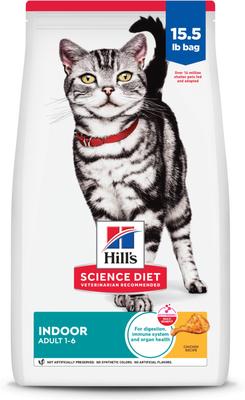
Hill's Science Diet Indoor Chicken
from
$63.99
A vet-favorite indoor formula balancing high-quality protein with hairball- and digestion-friendly fiber.
Pros
- + Top pick of Chewy's veterinary panel and widely recommended by vets
- + Indoor-specific fiber supports digestion and reduces hairballs
- + Omega-6 and vitamin E support skin and coat health
Cons
- – Contains grains and corn-derived ingredients some owners prefer to avoid
- – Pricier than basic supermarket kibble
ORIJEN Original Grain-Free
from
$75.99
A biologically-appropriate kibble packed with 90% animal ingredients and freeze-dried coating for picky eaters.
Pros
- + Very high protein with 90% animal ingredients and whole-prey recipe
- + Freeze-dried liver coating entices picky eaters
- + Includes probiotics, omega fatty acids, and added taurine
Cons
- – Some owners report stronger-smelling stool with this rich diet
At a glance
How they compare
| Spec | Top pickHill's Science Diet Indoor Chicken | ORIJEN Original Grain-Free |
|---|---|---|
| Price | $63.99 | $75.99 |
| Check price → | Check price → |
Hill’s Science Diet and ORIJEN sit at opposite ends of cat food philosophy: one is clinically validated and vet-recommended, the other is ingredient-obsessive and meat-forward. Both meet AAFCO standards, but they’re built for different owners and different priorities.
Bottom line: If your vet is involved in your cat’s care and you want a formula with clinical backing, Hill’s is the safer, more proven choice. If your cat is healthy, you want the highest protein-to-carb ratio you can get in a kibble, and you’re willing to pay for it, ORIJEN is genuinely impressive — with one caveat worth knowing.
The quick comparison
| Hill’s Science Diet Adult Indoor | ORIJEN Original Grain-Free | |
|---|---|---|
| Price | $64.99 / 15.5 lb | $75.99 / 12 lb |
| First ingredient | Chicken | Chicken, turkey, fish |
| Protein (min) | ~33% | 40% minimum |
| Grain-free | No | Yes |
| Animal ingredients | Not specified | 90% |
| Best for | Indoor adults 1–6, vet-monitored cats | Healthy cats, high-protein priority |
Protein and ingredient philosophy
This is where the two brands diverge most sharply. ORIJEN guarantees at least 40% crude protein and sources 90% of its ingredients from animal material — chicken, turkey, fish, organs, and bone. Hill’s Science Diet comes in around 33% protein, and while chicken is the first ingredient, the formula includes corn, wheat, and corn gluten meal.
For cats specifically, higher animal protein matters. Cats are obligate carnivores with a genuinely lower biological need for carbohydrates than dogs, so ORIJEN’s whole-prey philosophy aligns well with feline physiology. Hill’s counters with something ORIJEN doesn’t have: over 220 on-staff veterinarians and peer-reviewed clinical trials backing its formulas for conditions like renal disease, digestive issues, and weight management.
ORIJEN is the better kibble on raw ingredient quality. Hill’s is the better-studied option in clinical contexts.
Grain-free and the DCM question
Grain-free diets drew FDA scrutiny starting around 2018 over a potential link to dilated cardiomyopathy (DCM) in dogs. As of 2022, the FDA ended public updates on the investigation, citing a lack of clear causal evidence and multiple contributing factors including genetics, ingredients, and processing. The DCM concern is more firmly established in dogs than in cats, and the relationship remains unresolved rather than proven.
That said, if your vet recommends avoiding grain-free, Hill’s is the obvious pick. If your cat is healthy and your vet has no objections, ORIJEN’s grain-free formulation isn’t something to fear based on current evidence — but it’s worth discussing.
Price and value per calorie
At face value, ORIJEN is the pricier bag: $75.99 for 12 lb versus Hill’s $64.99 for 15.5 lb. But ORIJEN is calorie-dense at 4,120 kcal/kg, which means smaller portions per feeding. The per-pound cost works out to roughly $4/lb for ORIJEN and $2–3/lb for Hill’s, so Hill’s is still the better value by volume, and the gap matters over months of feeding.
ORIJEN does add a freeze-dried liver coating, which is genuinely useful if you have a picky cat — it’s a practical feature, not just a marketing point. Hill’s doesn’t have anything equivalent for palatability.
Vet recommendations and recall history
Hill’s is one of the two or three brands most commonly recommended in veterinary practices, partly because of its prescription diet lines and partly because of its research investment. ORIJEN gets mixed veterinary reception — some vets are comfortable with high-protein diets for healthy cats, others remain cautious.
On recalls: Hill’s recalled product twice, most recently in 2019 for elevated Vitamin D levels. ORIJEN had one recall in 2008 in Australia, which was a labeling issue rather than a contamination problem. Neither brand has a troubling track record, but Hill’s 2019 recall was more serious in nature.
One thing worth noting for ORIJEN buyers: Mars Petcare acquired Champion Petfoods (ORIJEN’s parent company) in early 2024. Some longtime users have reported perceived changes to the formula post-acquisition. It’s not confirmed, but if you’re switching your cat to ORIJEN, it’s worth monitoring the current formula against what’s been reviewed historically.
Hill’s Science Diet Adult Indoor Chicken Recipe — best for indoor adult cats
Price: $64.99 / 15.5-lb bag (check current price)
Made in the USA with global ingredients, this formula is designed specifically for lower-activity indoor cats aged 1 to 6. The fiber blend targets hairballs and digestion, and omega-6 fatty acids plus vitamin E support skin and coat.
Pros:
- Top pick of Chewy’s veterinary panel and widely recommended by practicing vets
- Indoor-specific fiber reduces hairballs and supports digestive regularity
- Omega-6 and vitamin E for coat health
Cons:
- Contains grains, corn gluten meal, and caramel colorant — ingredients some owners prefer to skip
- Also includes synthetic vitamin K (menadione sodium bisulfite complex), which some sources flag, though it’s a regulatory-approved ingredient
- More expensive than basic supermarket kibble without being the premium tier
Who it’s NOT for: owners who want a grain-free or low-carbohydrate diet, or cats with confirmed grain sensitivities.
ORIJEN Original Grain-Free High-Protein Dry Cat Food — best for high-protein priority
Price: $75.99 / 12-lb bag (check current price)
90% animal ingredients, 40% minimum crude protein, and a freeze-dried liver coating. It also includes probiotics, omega fatty acids, and added taurine — a nutrient cats can’t synthesize themselves and that some grain-free diets have been scrutinized for lacking.
Pros:
- Very high protein with a whole-prey formulation (muscle, organs, bone)
- Freeze-dried coating is a real palatability advantage for fussy cats
- Probiotics, omegas, and added taurine included
Cons:
- Highest price point here, and portion sizes mean the cost adds up
- Some owners report stronger-smelling stool, especially during the transition period
- Post-Mars acquisition formula consistency is an open question
Who it’s NOT for: cats with kidney disease or protein restrictions (where Hill’s prescription lines shine), and owners on a tighter budget.
How to choose between them
Go with Hill’s Science Diet if:
- Your vet has recommended it or a Hill’s therapeutic formula
- Your cat has a specific health condition (digestive issues, hairballs, weight management)
- You want a formula with clinical evidence behind it
- Your indoor adult cat is doing well on a mainstream diet
Go with ORIJEN if:
- Your cat is healthy with no protein restrictions
- You want the highest animal-ingredient ratio available in a dry kibble
- You have a picky eater who needs palatability help
- You’re willing to pay the premium and transition slowly to avoid digestive upset
Neither is universally superior. Hill’s wins on clinical validation and specific-life-stage targeting; ORIJEN wins on ingredient quality and protein density. The right answer depends almost entirely on your cat’s health status and what your vet says.
Frequently asked questions
Is ORIJEN cat food actually better than Hill’s Science Diet?
It depends on what ‘better’ means for your cat. ORIJEN has higher protein (40% vs ~33%), 90% animal ingredients, and no grains — all aligned with feline biology. Hill’s Science Diet has far more clinical research behind it and is widely recommended by vets, especially for cats with health conditions. For a healthy adult cat, ORIJEN’s ingredient profile is strong; for a cat with medical needs, Hill’s prescription-adjacent lines have clinical validation ORIJEN lacks.
Is grain-free cat food safe given the DCM concerns?
The DCM concern is primarily established in dogs, not cats. The FDA ended public updates on its grain-free DCM investigation in 2022, citing no clear causal link and multiple contributing factors. Current evidence doesn’t support avoiding grain-free cat food on DCM grounds alone, but it’s worth discussing with your vet, particularly if your cat has any cardiac history.
Which cat food is better for indoor cats — Hill’s Science Diet or ORIJEN?
Hill’s Science Diet Adult Indoor is specifically formulated for lower-activity indoor cats, with fiber blends targeting hairballs and digestion — a genuine functional advantage for that life stage. ORIJEN Original is marketed as suitable for all life stages, including indoor cats, and the higher protein may benefit indoor cats prone to obesity by improving satiety. Hill’s is the more targeted choice; ORIJEN is a strong all-rounder if your indoor cat is healthy.
How does ORIJEN’s caloric density affect how much you feed?
ORIJEN Original contains 4,120 kcal/kg (about 515 kcal per 8-oz cup), which is quite calorie-dense. That means you’ll feed smaller portions compared to a lower-density kibble, which partially offsets the higher per-bag price. Always follow feeding guidelines based on your cat’s weight and activity level, and adjust if your cat is gaining or losing weight.
Sources
- Orijen vs. Hill’s Science Diet | Pet Food Brand Comparison
- Quality Cat Food Formulations: 7 Best Picks for 2024 - The Pet Vet
- Unbiased Orijen Cat Food Review - Cats.com
- Unbiased Hill’s Cat Food Review In 2026 - Cats.com
- Hill’s Science Diet vs Orijen vs Acana for Dogs in Canada 2026
- Hill’s Pet Nutrition Nutritional Philosophy - Evidence-Based Clinical Nutrition
- FDA Investigation into Potential Link between Certain Diets and Canine Dilated Cardiomyopathy
- Diet-associated dilated cardiomyopathy: The cause is not yet known but it hasn’t gone away - Tufts Petfoodology