Review
Hill's Science Diet Indoor Review: A Trusted Formula With Real Trade-Offs
By Willa Hartley · Senior writer
Last updated
The verdict
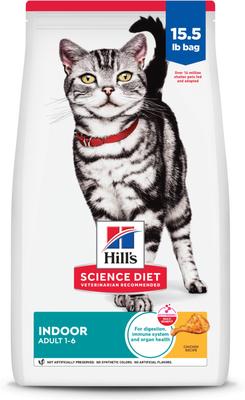
Hill's Science Diet Indoor Chicken
from
$63.99
A vet-favorite indoor formula balancing high-quality protein with hairball- and digestion-friendly fiber.
Best for: Owners of less-active indoor adult cats (ages 1-6) who want a science-backed mainstream dry food.
$63.99 · Check priceWhat we like
- + Top pick of Chewy's veterinary panel and widely recommended by vets
- + Indoor-specific fiber supports digestion and reduces hairballs
- + Omega-6 and vitamin E support skin and coat health
Worth noting
- – Contains grains and corn-derived ingredients some owners prefer to avoid
- – Pricier than basic supermarket kibble
We earn commissions from links on this page, at no cost to you. Our picks stay independent. Prices are indicative and were last checked around publication — they change often, so confirm the current price on the retailer’s site. How we research & rank →
Verdict: Hill’s Science Diet Adult Indoor Chicken Recipe is a solid, widely trusted choice for healthy adult indoor cats whose owners want a mainstream dry food backed by decades of research — but it’s not a perfect formula, and the ingredient list deserves a closer look before you commit.
Who it’s for
This food is aimed at adult cats aged 1 to 6 who live indoors and tend toward lower activity levels. Less-active cats accumulate hairballs more easily, gain weight faster, and have different fiber needs than outdoor cats. Hill’s built this formula around those specific problems: natural fiber for hairball control and digestion, omega-6 fatty acids and vitamin E for skin and coat, and L-carnitine to support metabolism in cats that spend most of their day napping.
At $64.99 for a 15.5-lb bag, it’s not cheap compared to supermarket kibble, but it’s priced roughly in line with other premium indoor-specific dry foods.
It’s probably not the right pick if your cat has confirmed grain sensitivities, chronic digestive issues tied to wheat or corn, or if you’re specifically looking for a high-protein, low-carbohydrate diet that mimics feline carnivore biology more closely.
What stands out
Veterinary credibility is real. Hill’s employs more than 200 veterinarians and nutritionists, has over 75 years of nutrition research behind it, and its formulas meet both AAFCO nutritional adequacy standards and WSAVA guidelines. The indoor formula is a top pick of Chewy’s veterinary panel and is genuinely one of the most commonly recommended dry foods in vet clinics. That consensus means something, even if it’s worth understanding the context (more on that below).
The fiber approach is purposeful. Hill’s uses powdered cellulose for hairball control, which research suggests is more effective for this purpose than alternatives like rice hulls. For indoor cats that groom heavily, this is a practical, evidence-based choice rather than a marketing claim.
Manufacturing is US-based. All production takes place in US-owned plants, using a mix of domestic and global ingredients. That’s a reasonable transparency bar for a major commercial brand.
Where it falls short
This is where honest reviewing requires pushing past the brand’s own framing.
The carbohydrate content is high — estimated around 42% in some Hill’s dry formulas, well above what most feline nutrition experts consider ideal for obligate carnivores. Cats evolved to get very little energy from carbohydrates, and for a food specifically targeting less-active indoor cats (who are already at higher risk of weight gain), that’s a genuine concern.
The ingredient list also includes corn gluten meal, whole grain wheat, and brewers rice as significant ingredients after chicken. Corn gluten meal is a cheaper protein source with lower bioavailability for cats than animal-based proteins. That doesn’t make the food harmful — it meets AAFCO minimums — but it does mean the “science-backed” branding reflects a different standard than “biologically optimized.”
For cats with wheat or corn sensitivities, this formula is a clear pass. Signs to watch for include chronic loose stool, skin irritation, or recurring ear infections.
On the recall history: Hill’s had a 2019 recall for dangerously elevated vitamin D levels across multiple products — a serious issue. The company responded by strengthening quality assurance protocols. The 2007 melamine contamination was industry-wide, and the 2014 salmonella recall affected dog food specifically. The 2019 incident is the most relevant one for current buyers to know about; the post-recall QA improvements are worth acknowledging, but so is the fact that the problem occurred.
On vet recommendations: Hill’s funds veterinary research and has deep ties to veterinary education, which some critics argue creates a bias toward recommending Science Diet products. That’s a legitimate structural concern. It doesn’t mean the food is bad, but it does mean “my vet recommends it” shouldn’t be the only box you check.
How it compares to the main alternatives
Royal Canin Indoor is the closest direct competitor — similar vet-brand positioning, similar carb-heavy dry food profile, and similar indoor-specific fiber focus. Neither brand wins on raw ingredient quality compared to smaller-batch, protein-first brands like Instinct or Open Farm.
Purina Pro Plan Adult Indoor Turkey & Rice is another common vet-recommended option, often praised for having a stronger protein profile (turkey as the first ingredient, with higher meat-based protein overall) at a lower price point. For owners who want mainstream dry food with vet backing but are concerned about the carbohydrate content, Pro Plan Indoor is worth comparing directly.
If your priority is minimizing carbs and maximizing animal protein, you’d be looking at wet food rather than any dry kibble — that’s simply the format’s limitation, not a Science Diet-specific problem.
Bottom line
Hill’s Science Diet Adult Indoor Chicken Recipe does what it says: it supports hairball control, provides skin and coat nutrition, and comes from a brand with rigorous research infrastructure and AAFCO compliance. For an uncomplicated, vet-familiar dry food for a healthy indoor adult cat, it earns its popularity.
But buyers should go in clear-eyed. The carbohydrate content is high, the grain-heavy ingredients conflict with some nutritional philosophies, and the brand’s vet relationships deserve acknowledgment. If your cat is thriving on it, that matters. If you’re still shopping, compare it against Purina Pro Plan Indoor before deciding — the price difference and ingredient comparison are worth a few minutes.
Frequently asked questions
Is Hill’s Science Diet Indoor AAFCO approved?
Yes. Hill’s Science Diet Adult Indoor meets AAFCO nutritional adequacy standards for adult cats, meaning it satisfies the minimum nutrient requirements established for feline health. It also aligns with WSAVA guidelines, which is an additional benchmark many vets reference when evaluating commercial cat foods.
Does Hill’s Science Diet Indoor help with hairballs?
It’s specifically formulated to reduce hairballs using natural fiber, including powdered cellulose, which research suggests is more effective for hairball control than some alternative fiber sources like rice hulls. Most owners report a noticeable reduction in hairball frequency, though results vary by cat.
Has Hill’s Science Diet cat food been recalled?
Hill’s has had several recalls over the years. The most significant for cat owners was a 2019 recall involving dangerously high vitamin D levels across multiple Hill’s products, including some cat foods. The company strengthened its quality assurance protocols following that recall. The 2014 salmonella recall affected dog food only.
Is Hill’s Science Diet Indoor good for overweight cats?
The Indoor formula includes L-carnitine to support metabolism, but it’s a general maintenance food, not a weight-management formula. For cats that are already overweight, Hill’s Science Diet Perfect Weight or Hill’s Prescription Diet Metabolic (the latter requiring a vet recommendation) are the clinically studied options — the Metabolic formula showed an average 11% weight loss over six months in published studies.
Sources
- Hill’s Science Diet Dry Cat Food Review | CatFoodAdvisor
- Hill’s Science Diet Cat Food Review – Pet Food Ratings
- Unbiased Hill’s Cat Food Review In 2026 - Cats.com
- Hill’s Science Diet Indoor Cat Food Review 2026 - AvailPet.com
- Hill’s Science Diet Cat Food Review in 2026: Recalls, Pros & Cons - Catster
- Hill’s Evidence-Based Clinical Nutrition (Weight Management)
- Nutrition - General Feeding Guidelines for Cats | VCA Animal Hospitals
- AAFP Consensus Statement on Feline Feeding Programs | AVMA
Specifications
| Made in | USA with global ingredients |
|---|---|
| Life stage | Adult cats 1-6 years, indoor |
| Fiber benefit | Natural fiber to reduce hairballs and support digestion |
| First ingredient | Chicken |
| Skin/coat support | Omega-6 fatty acids and vitamin E |
Alternatives
Other options worth comparing
Open Farm RawMix
Best for owners wanting the highest-quality, transparently sourced food
Hill's Science Diet Sensitive Stomach Chicken Rice
Best for cats with recurring vomiting, soft stool, or sensitive skin needing a gentle, vet-recommended everyday diet
Purina Friskies Wet Variety Pack
Best for owners feeding multiple cats or wanting variety