Buying guide
Best Cat Food in 2026: A Researched, No-Hype Buying Guide
By Willa Hartley · Senior writer
Last updated
We earn commissions from links on this page, at no cost to you. Our picks stay independent. Prices are indicative and were last checked around publication — they change often, so confirm the current price on the retailer’s site. How we research & rank →
Our picks
Ranked, with the trade-offs
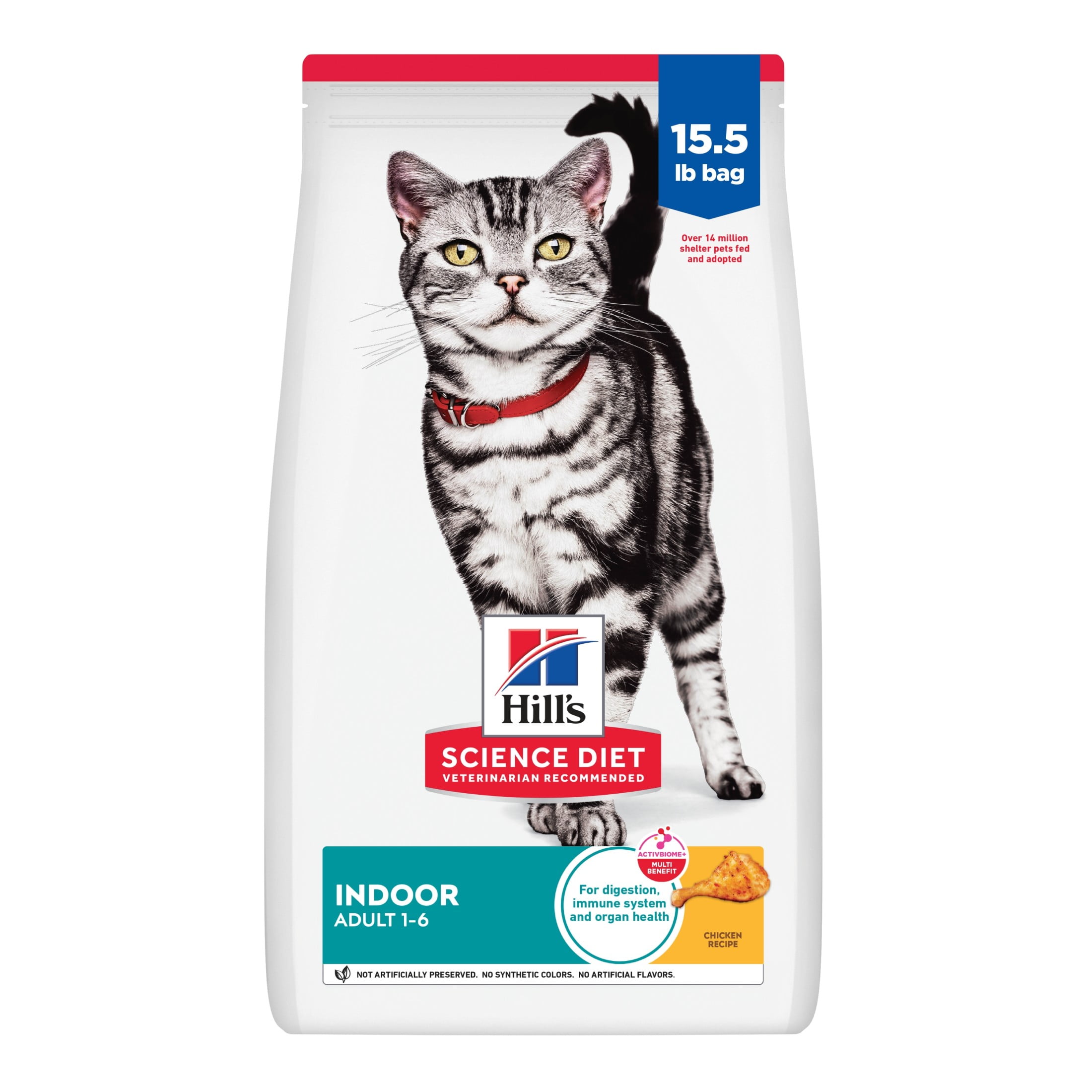
Hill's Science Diet Indoor Chicken
from
$63.99
A vet-recommended, science-backed indoor kibble that supports skin, coat, and easy litter box cleanup.
Pros
- + High-quality protein supports lean muscle, with omega-6 and vitamin E for skin and coat health
- + Contains ActivBiome+ prebiotic fibers and antioxidants for digestive and immune support
- + U.S. veterinarians' #1 recommended brand, with widely trusted formulation
Cons
- – Some cats reject the larger, firmer kibble shape based on owner reviews
- – Uses corn gluten meal as a protein source, which some owners prefer to avoid
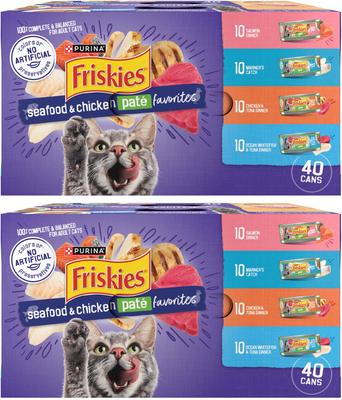
Purina Friskies Seafood Sensations
from
$65.52
An all-life-stages seafood-flavored kibble that picky and multi-cat households gravitate toward.
Pros
- + Provides 100% complete and balanced nutrition for all life stages
- + Contains protein for muscles plus taurine and vitamin A for vision support
Cons
- – Contains GMO grains and poultry by-product meal that some owners avoid
- – Lower-tier ingredient quality compared with other brands
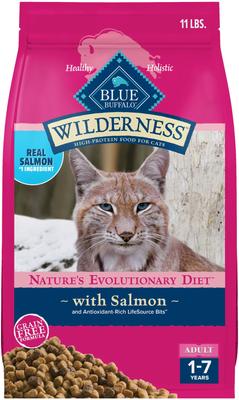
Blue Buffalo Wilderness Salmon Grain-Free
from
$44.98
A grain-free, high-protein kibble with real salmon first and antioxidant-rich LifeSource Bits.
Pros
- + Real salmon is the first ingredient, providing strong animal-based protein and omega-3s
- + Free of corn, wheat, soy, chicken by-product meals, artificial flavors, and preservatives
- + Antioxidant-rich LifeSource Bits support immune health; resealable bag
Cons
- – Contains pea protein, peas, and tapioca, raising the plant-based content
- – Higher carbohydrate level than some grain-free competitors
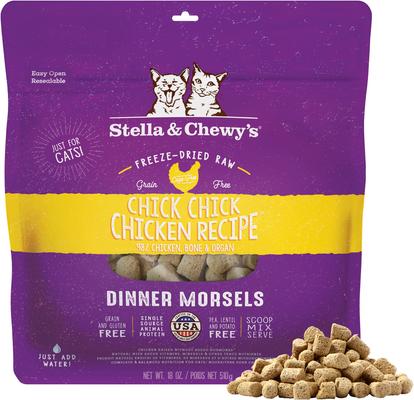
Stella & Chewy's Chicken Freeze-Dried Morsels
from
$46.97
A freeze-dried raw food made with 98% cage-free chicken, organs, and bone for picky or sensitive cats.
Pros
- + 98% meat, organs, and bone with limited ingredients, ideal for cats with sensitivities
- + Made in the USA with cage-free chicken and added taurine and probiotics
- + Can serve as a complete meal or a crave-worthy topper
Cons
- – Raw diets carry bacterial concerns that some veterinarians caution against
- – Requires proper storage and handling as a freeze-dried raw product
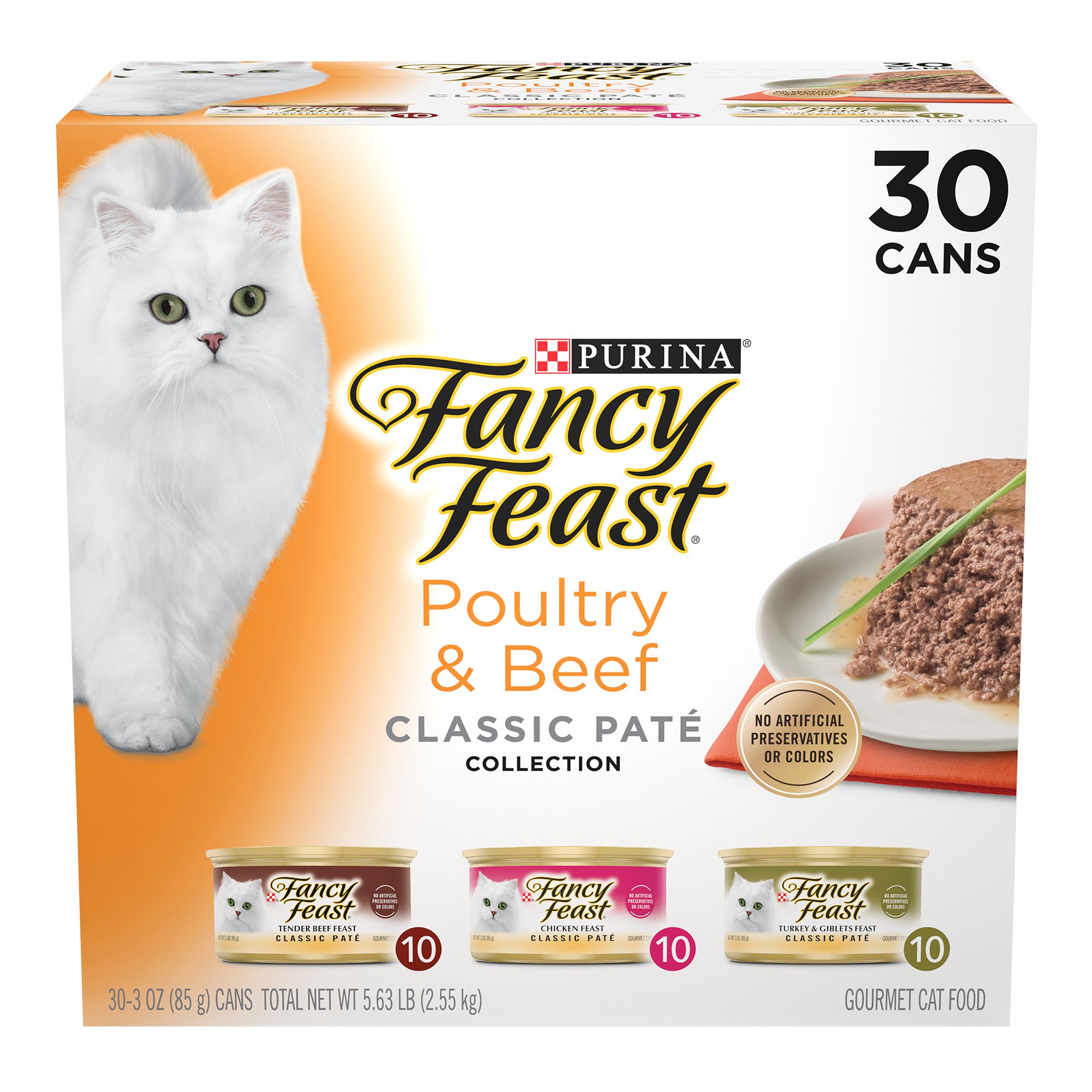
Fancy Feast Classic Poultry Beef Pate
from
$28.06
A widely loved gourmet pate variety pack with real meat first and a smooth texture cats crave.
Pros
- + Real meat or poultry is the #1 ingredient, with grain-free recipes
- + Smooth pate texture is highly palatable, even for picky and senior cats
- + Made in U.S. facilities without artificial colors or preservatives
Cons
- – Contains meat by-products and added artificial/natural flavors
- – Small 3-oz cans mean frequent feeding for larger cats
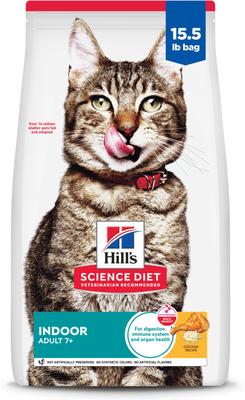
Hill's Science Diet Senior 7+ Indoor Chicken
from
$64.99
A senior-targeted indoor kibble supporting heart, kidney, bladder, and digestive health in older cats.
Pros
- + Antioxidants and balanced minerals support heart, kidney, and bladder health
- + Natural fibers aid digestion and easy litter box cleanup
- + Omega-6 and vitamin E noticeably improved coat and reduced shedding per owners
Cons
- – Kibble is larger and firm, which can be hard for cats with dental issues
- – Some cats refuse it despite eating the regular Senior 7+ formula
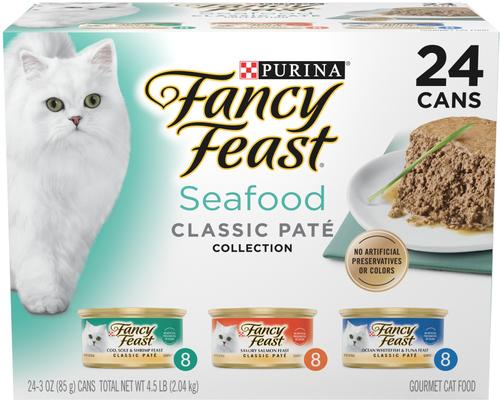
Fancy Feast Classic Seafood Feast
from
$22.86
A seafood-focused smooth pate variety pack with real cod, salmon, whitefish, tuna, and shrimp.
Pros
- + Real seafood as the primary ingredient across three flavors
- + Smooth finely ground pate appeals to picky and older cats
- + Made in U.S. facilities and provides complete, balanced nutrition for adults
Cons
- – Some owners report visible fish bones in certain fish flavors
- – Variety pack flavor ratios can be uneven within a case
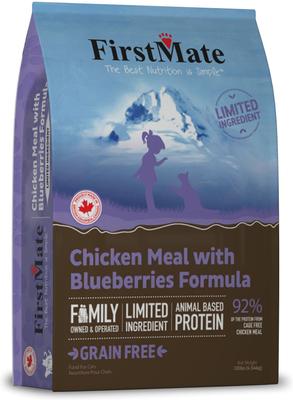
FirstMate Chicken Blueberries Limited Ingredient
from
$44.99
A limited-ingredient, single-animal-protein kibble that ranked as a top overall pick for nutrition and digestibility.
Pros
- + Cage-free chicken is the first ingredient and sole animal protein source
- + Limited ingredient list improves digestibility and reduces sensitivity triggers
- + High 40% crude protein on a dry matter basis
Cons
- – Limited single-protein focus won't suit cats needing protein rotation
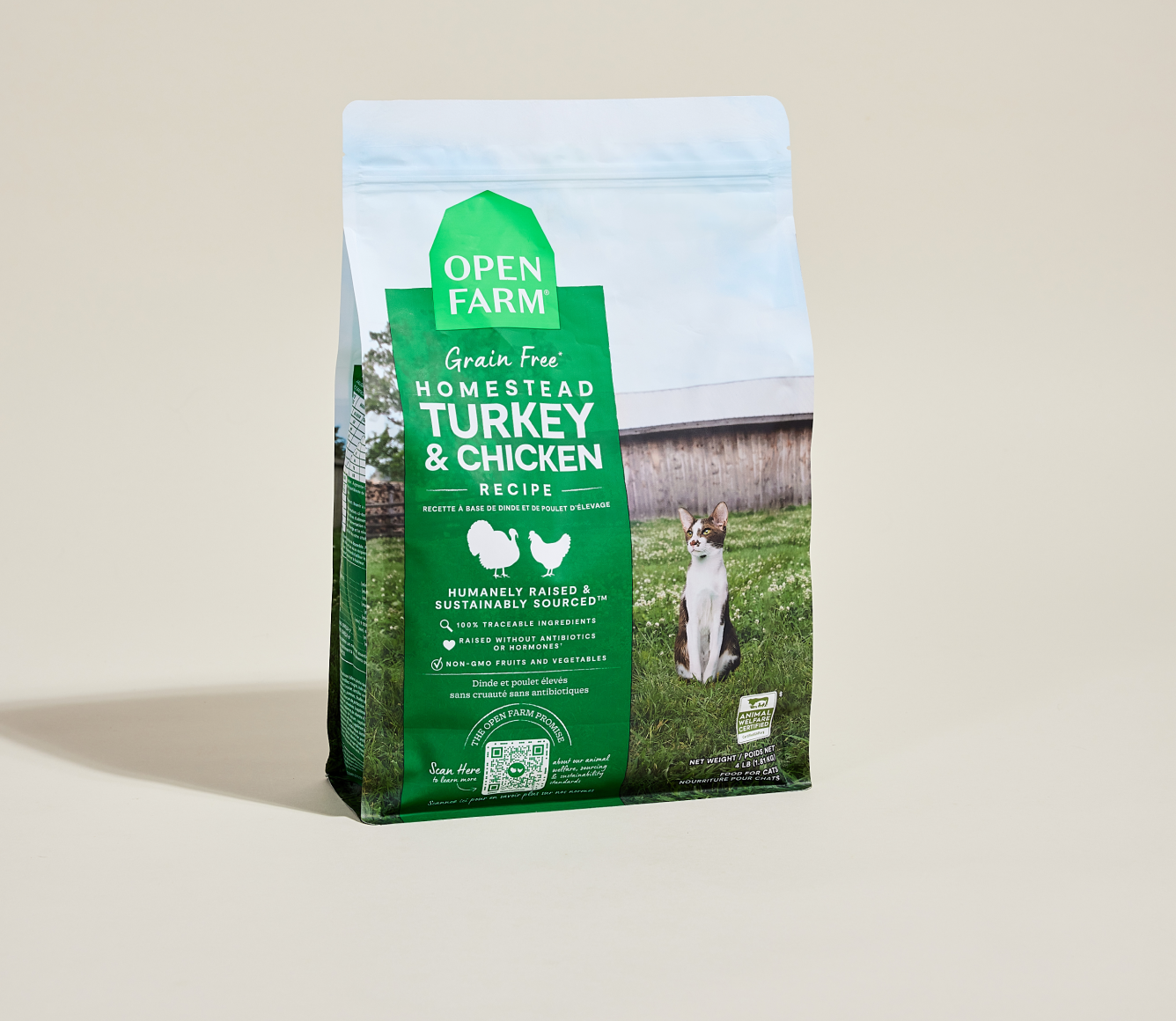
Open Farm Homestead Turkey Chicken
from
$47.99
An above-average grain-free kibble from an ethically sourced Canadian brand with balanced macronutrients.
Pros
- + High 41.1% protein on a dry matter basis from quality poultry
- + Locally sourced ingredients meeting strict animal welfare standards
- + Formulated with the full range of macronutrients, vitamins, and minerals cats need
Cons
- – Carbohydrate content is moderately high at ~30.9% dry matter

Smalls Fresh Human-Grade Bird
A subscription-based, human-grade fresh food cooked then frozen, with very high protein and low carbs.
Pros
- + Very high protein and very low carbohydrate profile, close to a cat's natural diet
- + Made from human-grade ingredients in a human-grade facility near Chicago
- + Cooked to lock in nutrients then frozen for freshness
Cons
- – Requires a subscription
- – Needs freezer storage and refrigeration after thawing
The verdict
Our top picks at a glance
Owners of indoor adult cats (1-6 years) who want a trusted, vet-endorsed mainstream dry food.
Owners wanting a higher-protein, grain-free kibble without corn, wheat, soy, or poultry by-products.
Owners of picky eaters or cats with food sensitivities who want minimally processed raw nutrition.
At a glance
How they compare
| Spec | Top pickHill's Science Diet Indoor Chicken | Purina Friskies Seafood Sensations | Blue Buffalo Wilderness Salmon Grain-Free |
|---|---|---|---|
| Price | $63.99 | $65.52 | $44.98 |
| Type | Dry kibble (indoor formula) | Dry kibble | Grain-free dry kibble |
| Bag size | 15.5 lb | 22 lb (also 16/30 lb) | 11 lb (also 4/5/9.5/15 lb) |
| Life stage | Adult (1-6 years) | All life stages | Adult |
| Check price → | Check price → | Check price → |
Top 3 of 10 shown — full shortlist above.
The short answer
For most healthy adult indoor cats, Hill’s Science Diet Adult Indoor Chicken Recipe is the safest default pick: it’s backed by feeding trials, formulated with veterinary nutritionists on staff, and it’s the brand vets recommend most often in the U.S. If your cat needs a single-protein diet for sensitivities, FirstMate Chicken Meal with Blueberries is the strongest all-around nutritional profile in this lineup, with 40% protein on a dry matter basis and a short ingredient list. For picky eaters, Stella & Chewy’s freeze-dried raw and the Fancy Feast pate variety packs consistently win taste tests among fussy cats, per aggregated owner reviews.
There’s no single “best” cat food for every cat. The right choice depends on life stage, whether your cat needs more moisture in the diet, budget, and any sensitivities. Below is how the ten options compare, plus how to choose between them.
Hill’s Science Diet Adult Indoor Chicken Recipe — best mainstream vet-recommended pick
This is the food most likely to already be in your vet’s recommendation stack, and for good reason. Hill’s runs AAFCO feeding trials rather than relying solely on lab-formulation math, and the company keeps board-certified veterinary nutritionists on staff to design its recipes. The indoor formula adds ActivBiome+ prebiotic fibers for digestion and omega-6/vitamin E for skin and coat, which matters for cats that groom heavily and get less activity than outdoor cats.
- Specs: Dry kibble, 15.5-lb bag, adult 1-6 years, chicken-based
- Pro: U.S. vets’ #1 recommended brand, with real feeding-trial data behind the formula
- Con: Uses corn gluten meal as a protein source, and some owners report their cats reject the firmer kibble shape
It’s not the highest-protein or most novel option here. It’s the safest bet if you want a mainstream food with real research behind it and don’t have a cat with special dietary needs.
Purina Friskies Seafood Sensations — best budget pick for multi-cat homes
Friskies is where a lot of multi-cat households land simply because cats like it and the bag lasts. It’s AAFCO-complete for all life stages, so it works across a mixed-age household, and Purina backs its formulas with a large in-house team of scientists and nutritionists. The trade-off is ingredient quality: it leans on GMO grains and poultry by-product meal, which puts it a tier below the other dry foods on this list.
- Specs: Dry kibble, 22-lb bag (also 16/30 lb), all life stages, salmon/tuna/shrimp/seaweed flavor
- Pro: Palatable across multiple cats and life stages, with taurine and vitamin A for vision support
- Con: Lower-tier ingredients compared with every other dry food in this guide
This is the pragmatic choice when you’re feeding several cats and palatability plus cost matter more than premium sourcing.
Blue Buffalo Wilderness Salmon Recipe — best grain-free with real meat first
Deboned salmon is the first ingredient here, and the formula skips corn, wheat, soy, and chicken by-product meals entirely. The LifeSource Bits are Blue Buffalo’s antioxidant-supplement kibble pieces, added for immune support. Worth knowing: despite being grain-free, this formula still leans on pea protein, peas, and tapioca, pushing carbs to roughly 28.9% on a dry matter basis, higher than some other grain-free competitors. Current veterinary evidence doesn’t tie grain-free diets to heart disease risk in healthy cats specifically (that concern is much better documented in dogs), so this is more a preference call than a health mandate.
- Specs: Grain-free dry kibble, 11-lb bag (also 4/5/9.5/15 lb), adult, ~28.9% carbs, salmon first
- Pro: Strong animal-based protein and omega-3s from real salmon
- Con: Meaningful plant-based content despite the grain-free label
Stella & Chewy’s Chick Chick Chicken Dinner Morsels — best for picky or sensitive eaters
At 98% chicken, organs, and bone, this is about as close to a whole-prey diet as a shelf-stable product gets. Freeze-drying preserves nutrients better than extrusion cooking, and the limited ingredient list (no grain, gluten, peas, lentils, or potato) makes it a strong option for cats with food sensitivities. It’s complete and balanced for both adult cats and kittens, and it doubles as a topper to coax picky eaters onto other foods.
- Specs: Freeze-dried raw, 18-oz bag (~10 cups), 98% meat/organs/bone, adult & kitten
- Pro: Minimally processed with added taurine and probiotics
- Con: Raw and freeze-dried raw diets carry bacterial contamination risk that some veterinarians and the AVMA caution against, especially in households with young children, elderly members, or immunocompromised people
If you go this route, follow the storage and handling instructions closely: freeze-dried raw isn’t shelf-stable in the same forgiving way kibble is.
Fancy Feast Classic Poultry & Beef Pate Variety Pack — best everyday wet food
Wet food matters more than most owners realize. Dry kibble contains only 6-10% moisture versus roughly 75% in wet food, and cats on all-dry diets tend to have lower total water intake and more concentrated urine, a real risk factor for lower urinary tract disease. Fancy Feast’s pate line leads with real chicken, turkey, or beef and has a smooth texture that’s genuinely popular with senior and picky cats. The 3-oz cans mean portion control is easy, though that also means more cans per week for a larger cat.
- Specs: 30-can variety pack, 3-oz cans, smooth pate, 10-11% crude protein as fed
- Pro: Real meat first, grain-free recipes, highly palatable texture
- Con: Contains by-products and added flavors; small cans mean frequent feeding
Hill’s Science Diet Senior Adult 7+ Indoor Chicken Recipe — best for senior cats
This is the age-appropriate sibling to Hill’s adult indoor formula, tuned for the health issues that show up more often in cats seven and older: kidney and bladder strain, heart function, and slower digestion. It carries the same research pedigree as the adult version, with antioxidants and balanced minerals aimed specifically at organ health.
- Specs: Dry kibble, 15.5-lb bag (also 7 lb), senior 7+, chicken-based, focused on heart/kidney/bladder/digestion
- Pro: Owners report noticeably improved coat and reduced shedding
- Con: Kibble is large and firm, which can be tough on cats with dental issues or missing teeth
If your senior cat has diagnosed kidney disease, talk to your vet about a therapeutic renal diet rather than relying on this over-the-counter senior formula alone; the extra hydration from wet food also becomes more valuable at this life stage.
Fancy Feast Classic Seafood Feast Variety Pack — best for seafood-loving cats
Same smooth, finely-ground pate format as the poultry/beef line, but built around cod, salmon, whitefish, tuna, and shrimp across three flavors. It’s a good option if your cat is a confirmed fish-flavor cat and you want the hydration benefit of wet food. A handful of owners have reported visible small fish bones in certain flavors, worth knowing if you have a cat that eats quickly.
- Specs: 24-can variety pack, 3-oz cans, finely ground pate, adult
- Pro: Real seafood as the primary ingredient across all three flavors
- Con: Occasional visible bones reported; flavor ratios in the case can be uneven
FirstMate Chicken Meal with Blueberries — best overall nutrition for sensitive cats
This is the strongest nutritional profile in the lineup on paper: 40% crude protein on a dry matter basis from a single animal protein (cage-free chicken), with nothing else muddying the ingredient list. Limited-ingredient diets like this are the standard veterinary approach for cats with suspected food sensitivities, since fewer proteins mean fewer possible triggers, and it makes elimination trials far easier to interpret.
- Specs: Limited-ingredient dry kibble, ~18% crude fat, 40% crude protein (dry matter), single animal protein
- Pro: High protein with a genuinely short, traceable ingredient list
- Con: The single-protein focus means it won’t work if your feeding plan calls for protein rotation
Open Farm Grain-Free Homestead Turkey & Chicken — best for ethical sourcing
Open Farm’s whole pitch is traceability: ingredients from farms and fisheries that meet defined animal welfare standards, all disclosed rather than vague. Nutritionally it holds up too, at 41.1% crude protein and 20% crude fat on a dry matter basis, from quality poultry sources. Carbs land around 30.9% dry matter, moderately high for a grain-free formula, so it’s not the leanest option if minimizing carbohydrates is your main goal.
- Specs: Grain-free dry kibble, 20% crude fat, 41.1% crude protein, chicken/turkey, 30.9% carbs (all dry matter)
- Pro: High protein from ethically and locally sourced poultry
- Con: Carb content undercuts the grain-free positioning somewhat
Smalls Fresh Human-Grade Ground Bird — best fresh/subscription option
Of everything in this guide, Smalls’ macronutrient profile is closest to what a cat would eat in the wild: 55.4% protein, just 6.3% carbohydrates, and 30.4% fat, all dry matter. It’s cooked (not raw) then frozen, which sidesteps the bacterial concerns that come with raw diets while still avoiding the higher heat and processing of extruded kibble. It’s made in a human-grade facility near Chicago.
The catch is logistics: it’s subscription-only, needs freezer space, and requires refrigeration once thawed, so it demands more from your routine than a bag of kibble sitting in the pantry.
- Specs: Fresh/frozen, human-grade, 55.4% protein, 6.3% carbs, 30.4% fat (dry matter), chicken
- Pro: Very high protein, very low carb, close to a cat’s natural dietary needs
- Con: Subscription commitment plus freezer and fridge storage requirements
How to choose between them
Start with life stage. Kittens need higher protein minimums (AAFCO sets 30% for growth versus 26% for adult maintenance), and senior cats benefit from formulas tuned for kidney and heart support, like the Hill’s 7+ line. From there:
- Check for the AAFCO statement. Every legitimate cat food should state it’s “complete and balanced” for a specific life stage. This is a floor, not a quality ceiling, but its absence is a red flag.
- Weigh moisture content. If your cat has a history of urinary issues, is diabetic, or just doesn’t drink much water, wet, freeze-dried (rehydrated), or fresh food adds meaningful hydration that dry kibble can’t match.
- Don’t assume grain-free means healthier. Grains actually supply useful nutrients like iron, calcium, and B vitamins, and the current evidence doesn’t link grain-free diets to heart disease in cats the way it’s been scrutinized in dogs. Choose grain-free for allergy or preference reasons, not because grain itself is a problem.
- Match protein source to sensitivities. If your cat has a suspected allergy or sensitive stomach, a limited-ingredient, single-protein food like FirstMate makes elimination diets far easier to manage than a multi-protein formula.
- Don’t expect dry food to clean teeth. Tufts University veterinary researchers have found regular dry kibble doesn’t meaningfully reduce plaque; only dental-specific formulas with the right kibble texture and additives do that job.
Can cats eat cheese?
Most cats shouldn’t eat cheese regularly. Cats are obligate carnivores and many are lactose intolerant as adults, so dairy can cause digestive upset like diarrhea or vomiting. A tiny lick as an occasional treat won’t harm most cats, but it offers no nutritional benefit and isn’t worth the GI risk for a cat with a sensitive stomach.
Can cats eat eggs?
Fully cooked eggs are safe for cats in small amounts and provide easily digestible protein. Raw eggs are the problem: they carry salmonella risk and contain avidin, a protein that blocks biotin absorption over time. Scrambled or hard-boiled, plain, with no salt, butter, or seasoning, is the safer way to offer it as an occasional extra, not a diet staple.
Can cats taste sweet?
No. Cats lack the taste receptor gene for sweetness, so they genuinely can’t perceive sugar the way humans or dogs do. This is one reason cats are true obligate carnivores: their palate evolved around detecting amino acids and fat in meat rather than sugars in fruit or starch, and it’s part of why sweetened treats offer them no flavor payoff at all.
Can dogs eat cat food?
An occasional bite of cat food won’t hurt a dog, but it’s not a safe regular diet. Cat food is formulated with much higher protein and fat levels than dogs need, which can lead to weight gain and digestive upset over time. It’s also missing the balance of nutrients dogs require long-term, so dogs raiding the cat’s bowl regularly is worth correcting rather than ignoring.
How to choose between dry, wet, freeze-dried, and fresh
Each format trades off convenience, cost, and moisture content. Dry kibble is cheapest per meal and easiest to free-feed, but delivers the least hydration. Wet food costs more per calorie but supports hydration and is often more palatable for older or pickier cats. Freeze-dried raw and fresh/frozen options sit at the premium end, offering less processing and higher meat content, but they demand more careful storage and, in freeze-dried raw’s case, come with the bacterial handling caution that applies to any raw pet food.
Bottom line
There isn’t one best cat food, there’s a best food for your specific cat’s age, health status, and preferences. For a healthy indoor adult with no special needs, Hill’s Science Diet Adult Indoor is the well-researched default. For sensitivities, go with FirstMate or Stella & Chewy’s. For hydration and picky eaters, add a wet food like the Fancy Feast lines into the rotation regardless of what dry food you choose. And if your cat is a senior, make the switch to an age-appropriate formula like Hill’s 7+ before problems show up, not after.
Sources
- 9 Best Cat Foods in 2026, Recommended By Vets | PetMD
- The Best Cat Foods for 2026: A Vet Tells All
- Quality Cat Food Formulations: 7 Best Picks for 2024 - The Pet Vet
- Vet Recommended Cat Food: What Cat Owners Should Know Before Changing Their Cat’s Diet - Ponderosa Veterinary Clinic
- Best Cat Food Brands for Quality: Vet-Trusted Picks – Life Logic Lab
- The Best Vet-Recommended Cat Foods of 2026 | NBC Select
- 10 Best Cat Foods in 2026, Vet Recommended
- 4 Best Cat Food Brands - AAFCO & WSAVA Compliance
FAQ
Frequently asked questions
- Can cats have peanut butter?
- A small lick of plain, unsalted peanut butter is not toxic to cats, but it isn't good for them either. It's high in fat, offers no nutritional benefit for an obligate carnivore, and can be a choking or digestive hazard in more than trace amounts. There's no reason to make it a regular part of a cat's diet.
- Can cats eat bread?
- Small amounts of plain, fully baked bread are not toxic to cats, but it has no nutritional value for them and can contribute to unwanted weight gain if given regularly. Raw yeast dough is genuinely dangerous, since it can expand in the stomach and produce alcohol as it ferments, so any unbaked dough should be kept well out of reach.
- Is grain-free cat food actually healthier?
- Not automatically. Grains provide useful nutrients like iron, calcium, and B vitamins, and current veterinary evidence hasn't established a link between grain-free diets and heart disease in healthy cats. Choose grain-free for a specific allergy or sensitivity, not on the assumption that grain itself is harmful.