Buying guide
Good Dry Cat Food for Indoor Cats: 9 Picks for Every Budget and Life Stage
By Willa Hartley · Senior writer
Last updated
We earn commissions from links on this page, at no cost to you. Our picks stay independent. Prices are indicative and were last checked around publication — they change often, so confirm the current price on the retailer’s site. How we research & rank →
Our picks
Ranked, with the trade-offs
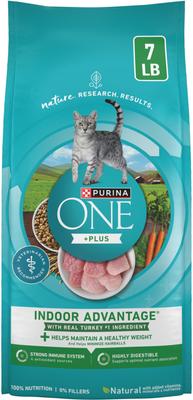
Purina ONE +Plus Indoor Advantage Turkey
from
$17.97
A solid weight-control kibble with real turkey first that balances mainstream nutrition with hairball and immune support.
Pros
- + Real turkey is the #1 ingredient providing high protein for muscle support
- + 10% less fat than Purina ONE Tender Selects to help with weight control
- + Natural fiber and four antioxidant sources help minimize hairballs and support immunity
Cons
- – Some owners report it caused vomiting/diarrhea or didn't resolve hairballs for their cats
- – Uses some grains and is less species-appropriate than grain-free options
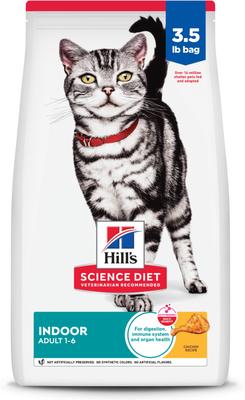
Hill's Science Diet Indoor Chicken
from
$22.99
A veterinarian-favorite indoor formula with chicken first, natural fiber for hairballs, and easy digestion for cleaner litter boxes.
Pros
- + Vet-recommended brand with decades of science-led nutrition research
- + High-quality protein supports lean muscle while natural fiber reduces hairballs
Cons
- – Contains whole grain wheat, corn gluten meal and other grains some owners avoid
- – Some owners report formula changes upset sensitive cats
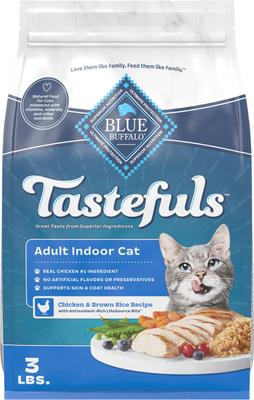
Blue Buffalo Tastefuls Indoor Chicken Brown Rice
from
$14.98
A natural, real-chicken-first indoor recipe with no by-product meals, corn, wheat or soy, plus antioxidant-rich LifeSource Bits.
Pros
- + Real deboned chicken first with no by-product meals, corn, wheat or soy
- + LifeSource Bits add antioxidants for immune system support
- + Natural fiber supports digestion and coat health, with many cats loving the taste
Cons
- – Some cats refuse it or experienced constipation/scooting after switching
- – Larger bags aren't resealable and a few buyers noted inconsistent kibble sizing
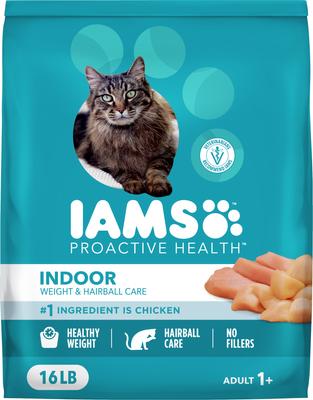
IAMS Proactive Health Indoor Weight Hairball
from
$33.98
A chicken-first kibble built around L-carnitine and a beet-pulp fiber blend to target weight and hairballs.
Pros
- + L-carnitine helps maintain a healthy weight and metabolism
- + Proprietary beet-pulp fiber blend helps reduce hairballs before they start
- + Works well for grazing multi-cat homes
Cons
- – Some long-time buyers report recent quality/consistency issues and foreign objects in bags
- – Contains chicken by-products and grains

Royal Canin Indoor Adult
from
$23.99
A precisely engineered indoor diet targeting weight, hairballs, stool odor and even dental tartar with a distinctive triangular kibble.
Pros
- + Highly digestible proteins reduce litter box waste and odor
- + Multiple fiber types control hairballs and encourage intestinal transit
- + Unique kibble shape encourages chewing to help reduce dental tartar
Cons
- – Larger triangular kibble caused vomiting in some cats and uses corn/wheat
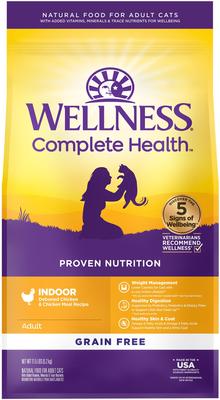
Wellness Complete Health Indoor Chicken Grain-Free
from
$35.19
A grain-free indoor recipe with deboned chicken, added L-carnitine and fiber, made in the USA with non-GMO ingredients.
Pros
- + High-quality grain-free recipe with deboned chicken and no meat by-products or fillers
- + Fiber and L-carnitine help support indoor cats' health and weight
- + Grain-free formula helped eliminate gas problems for some cats and supports healthy coats
Cons
- – Not specifically formulated for hairball control
- – Several owners report their cats simply refuse the kibble despite liking other Wellness products
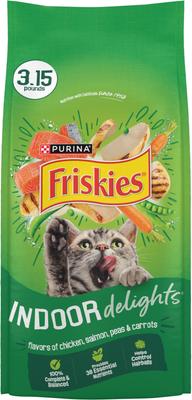
Purina Friskies Indoor Delights
from
$5.79
A highly palatable indoor kibble with fun shapes and chicken/salmon/cheese/greens flavors plus basic hairball and weight support.
Pros
- + 100% complete and balanced for adult cats
- + Highly palatable shapes and flavors that even picky cats tend to devour
- + Provides essential fatty acids, taurine and antioxidants for basic health
Cons
- – Not particularly high in protein and relatively high in carbohydrates
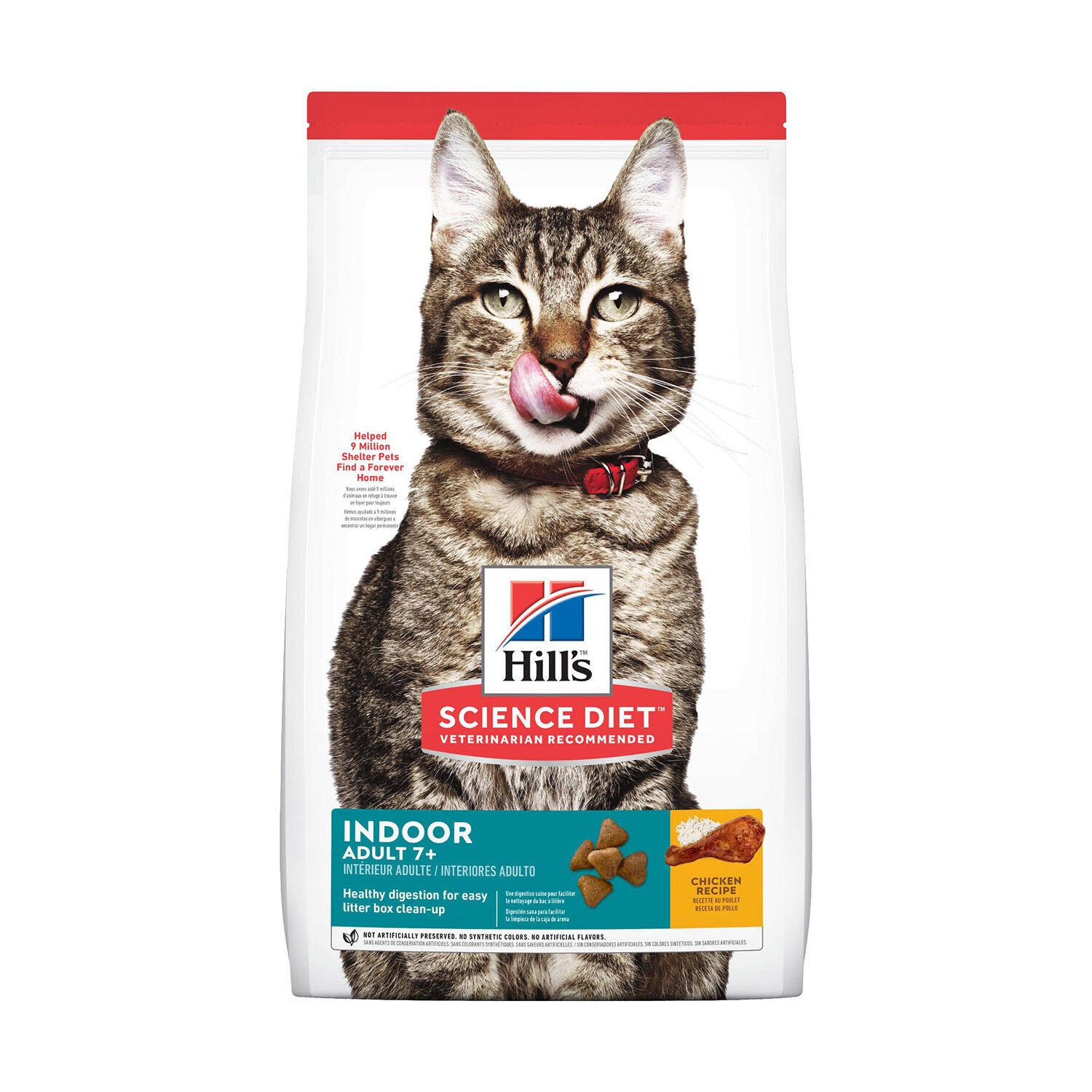
Hill's Science Diet Senior 7+ Indoor Chicken
from
$64.99
A senior-tailored indoor formula with ActivBiome+ prebiotics and antioxidants to support gentle digestion and graceful aging.
Pros
- + ActivBiome+ prebiotic fibers support healthy gut, digestion and regular stool in older cats
- + Antioxidants help promote cellular health for heart, kidneys and other vital organs
- + Chicken-first recipe with omega-6 and vitamin E for skin and coat
Cons
- – Contains brewers rice and corn gluten meal that grain-avoidant owners may dislike
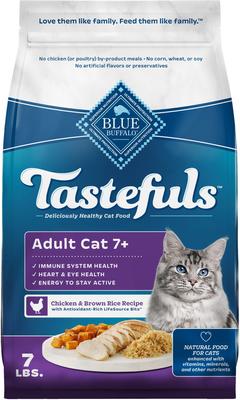
Blue Buffalo Tastefuls Senior 7+ Indoor Hairball
from
$31.98
A natural mature-cat recipe with deboned chicken, a cellulose-and-psyllium fiber blend for hairballs, and antioxidant LifeSource Bits.
Pros
- + High-quality deboned chicken helps maintain strong muscles in mature cats
- + Unique cellulose and psyllium seed fiber blend helps reduce hairballs
- + No chicken by-product meals, corn, wheat or soy, with antioxidant LifeSource Bits
Cons
- – Like other Blue recipes, some cats may experience digestive upset on the switch
- – Pea protein and multiple plant ingredients rank high on the list
The verdict
Our top picks at a glance
Owners of mostly-sedentary indoor cats who want a vet-recommended brand.
Owners who want a science-backed, vet-recommended diet for adult indoor cats aged 1–6.
Owners who want natural ingredients and no by-products/fillers while still using wholesome grains.
Multi-cat households needing a weight-and-hairball formula that can be left out for grazing.
At a glance
How they compare
| Spec | Top pickPurina ONE +Plus Indoor Advantage Turkey | Hill's Science Diet Indoor Chicken | Blue Buffalo Tastefuls Indoor Chicken Brown Rice |
|---|---|---|---|
| Price | $17.97 | $22.99 | $14.98 |
| First ingredient | Real turkey | Chicken | Deboned chicken |
| Made in | — | USA with global ingredients | USA |
| Check price → | Check price → | Check price → |
Top 3 of 9 shown — full shortlist above.
Indoor cats have a specific set of nutritional challenges that ordinary kibble doesn’t always address: lower activity levels that make weight gain easy, more grooming time that drives hairball problems, and a natural carnivore biology that demands high protein regardless of how little they move. The right dry food threads all of those needles.
Top pick overall: Hill’s Science Diet Adult Indoor Chicken Recipe for most adult cats aged 1–6. It’s vet-recommended, built on real science, and addresses the core indoor-cat concerns in one formula. If budget is the priority, Purina ONE +Plus Indoor Advantage is the strongest mainstream alternative.
Below, nine options broken down honestly by who they actually suit.
What makes a dry food genuinely good for indoor cats
Before getting into the picks, a few things worth understanding:
Protein first. AAFCO requires a minimum of 26% crude protein on a dry matter basis for adult cats. Cats are obligate carnivores — they can’t synthesize taurine or pre-formed Vitamin A on their own, so both need to come from animal protein in the diet. A named meat source (chicken, turkey, salmon) should be the first ingredient, full stop.
Calories matter more than volume. An average 10-pound indoor cat needs roughly 200 calories a day, which works out to about 1/3 to 1/2 cup of kibble depending on caloric density. Most owners overfeed because they go by volume rather than calories. The feeding guide on the bag is a baseline, not a prescription — body condition matters more.
Carbohydrates are worth watching. Dry food is inherently higher in carbs than wet food, but there’s a real range across formulas. High-carb diets are associated with metabolic issues in indoor cats, and research supports higher-protein, lower-carb formulations for weight control. That doesn’t mean every cat needs grain-free, but it’s worth knowing the number.
Fiber does real work. A moderate fiber level supports satiety (helpful for cats that graze), aids hairball transit, and keeps digestion regular. Too little and hairballs pile up; too much and you get loose stools.
The AAFCO statement tells you a floor, not a ceiling. “Complete and balanced” means the food meets minimum adequacy standards — it doesn’t guarantee ingredient quality, digestibility, or that it was substantiated by actual feeding trials rather than just formulation math. Look for feeding-trial language when you can find it.
What is a good dry cat food for indoor cats
The short answer: a food with a named meat protein as the first ingredient, at least 26% crude protein on a dry matter basis, moderate fat and calories appropriate for a less-active lifestyle, and some fiber for hairball and digestive support. Whether it’s grain-free or grain-inclusive, budget or premium, matters less than those fundamentals.
The nine picks below cover every budget and the two main life stages (adult 1–6, senior 7+).
Hill’s Science Diet Adult Indoor Chicken Recipe Dry Cat Food — Best overall for adult cats 1–6
Price: $60
Best for: Owners who want a science-backed, vet-recommended diet for adult indoor cats aged 1–6 and value brand trust over grain-free.
Hill’s has decades of clinical nutrition research behind its formulas, and this one shows. Chicken is the first ingredient, natural fiber reduces hairballs, and the digestibility is high enough that litter box clean-up genuinely improves — something you’ll see mentioned consistently in owner reviews. Omega-6 fatty acids and vitamin E handle skin and coat.
- Made in the USA with global ingredients
- Designed specifically for the 1–6 year adult indoor life stage
- Roughly 77 cups per 15.5-lb bag
Where it falls short: It contains whole grain wheat, corn gluten meal, and other grains that grain-avoidant owners will want to avoid. It’s also one of the pricier mainstream options, and some owners with sensitive cats have reported issues after formula changes — worth monitoring on the first bag.
For most healthy adult indoor cats, this is the clearest recommendation.
Purina ONE +Plus Indoor Advantage with Real Turkey — Best budget pick
Price: $23
Best for: Budget-conscious owners of mostly-sedentary indoor cats who want a vet-recommended brand at a mainstream price.
Real turkey as the first ingredient is a genuine win at this price point, and the formula backs it up with 10% less fat than Purina ONE Tender Selects — directly addressing weight management for low-activity cats. Four antioxidant sources plus a natural fiber blend hit the hairball and immune support boxes.
- 398 kcal/cup — on the higher end, so portion discipline matters
- No artificial flavors or preservatives; no fillers claimed
- Grain-inclusive
Where it falls short: Some owners report digestive upset (vomiting, diarrhea) during or after transition, and hairball resolution isn’t guaranteed. It uses grains, which makes it less species-appropriate than premium options. But for the price, the nutritional foundation is solid.
Blue Buffalo Tastefuls Chicken & Brown Rice Recipe Adult Indoor — Best mid-tier natural pick
Price: $33
Best for: Owners who want natural ingredients and no by-products or fillers at a mid-tier price, while still using wholesome grains.
Deboned chicken leads the ingredient list, and Blue Buffalo excludes chicken by-product meals, corn, wheat, and soy — a meaningful step up from standard mainstream formulas. The signature LifeSource Bits (a blend of antioxidants, vitamins, and minerals) add immune support beyond what the base kibble provides. Omega-3 and 6 cover skin and coat.
- Made in the USA
- Natural fiber for digestion and hairball support
- Broad palatability — many owners note their pickier cats took to it easily
Where it falls short: A portion of buyers report constipation or digestive upset after switching, which may relate to the pea content or fiber levels. Larger bags aren’t resealable, and kibble size has been reported as inconsistent. The pea protein and multiple plant proteins ranking high on the ingredient list is also worth noting for owners who want a more meat-forward profile.
IAMS Proactive Health Indoor Weight & Hairball Care — Best for multi-cat grazing homes
Price: $28
Best for: Multi-cat or budget households needing a reasonably priced weight-and-hairball formula that can be left out for grazing.
L-carnitine for fat metabolism and a proprietary beet-pulp fiber blend for hairball control give this formula a functional focus that goes beyond most budget options. Calcium and potassium for heart support are a nice inclusion. Real chicken is first.
- Omega-3 and 6 for coat health
- Works well for free-choice feeding across multiple cats
- Priced between Friskies and the mid-tier options
Where it falls short: Recent buyer reviews flag quality consistency problems and, in some cases, foreign objects in bags — concerning enough to mention. It also contains chicken by-products and grains despite marketing language that implies otherwise. Check reviews on the current bag before committing to a large purchase.
Royal Canin Feline Health Nutrition Indoor Adult — Best for targeted indoor concerns
Price: $38
Best for: Owners of lazy housecats wanting targeted, science-driven nutrition that also tackles litter-box odor and dental tartar.
Royal Canin’s indoor formula is one of the few that specifically addresses stool odor — a real quality-of-life concern with indoor cats — through highly digestible proteins. The triangular kibble shape is designed to encourage chewing and reduce tartar buildup. Multiple fiber types handle both hairballs and intestinal transit. This is genuinely a more engineered product than most.
- Moderate fat for lower indoor activity levels
- First ingredient: chicken meal (concentrated protein)
- Combination fiber system for hairball control
Where it falls short: Premium pricing for a food that still uses corn and wheat. The larger triangular kibble caused vomiting in some cats, which may be a fit issue for smaller-mouthed breeds or cats that eat fast. Not the right choice if your cat has grain sensitivities.
Wellness Complete Health Grain-Free Indoor Deboned Chicken Recipe — Best grain-free option
Price: $35
Best for: Owners wanting a high-quality grain-free indoor diet for cats with grain sensitivities or gas issues.
If your cat has been showing signs of grain intolerance — gas, loose stools, dull coat — this is worth trying. Deboned chicken first, no meat by-products or fillers, made in the USA with non-GMO ingredients. L-carnitine and fiber target the weight and indoor-activity concerns. Carbohydrates come in around 29.9% on a dry matter basis, which is lower than most kibble.
- Grain-free and GMO-free
- Fiber and L-carnitine combination for indoor cats
- Made in the USA only
Where it falls short: It’s not formulated specifically for hairball control, which is a gap for heavy groomers. And palatability is a genuine problem — a meaningful number of owners report their cats flatly refused it, including cats that previously ate other Wellness products. Consider a small bag first.
Purina Friskies Indoor Delights — Best for extreme budgets or colony feeding
Price: $18
Best for: Very budget-focused owners, multi-cat homes, or those feeding outdoor/feral colonies who prioritize palatability and price.
Friskies meets AAFCO “complete and balanced” requirements, provides taurine, essential fatty acids, and antioxidants, and cats tend to love it. Multiple shapes and flavors (chicken, salmon, cheese, garden greens) drive palatability. At 364 kcal/cup, it’s also slightly lower calorie than some competitors.
- 100% complete and balanced for adult cats
- Hairball control and healthy weight support included in the formula
- Broadest affordability of the group
Where it falls short: This is a budget food and behaves like one nutritionally. Carbohydrates sit around 38% — high for a species-specific diet. Protein quality and quantity lag behind every other pick on this list. For a single indoor cat with weight concerns or health sensitivities, other options are meaningfully better. Friskies makes sense for volume needs or highly palatable supplemental feeding.
Hill’s Science Diet Adult 7+ Indoor Chicken Recipe — Best for senior indoor cats
Price: $65
Best for: Owners of senior indoor cats (7+) wanting vet-backed nutrition focused on digestion, organ and immune health.
The standout here is ActivBiome+ prebiotic fiber technology, which supports gut health and digestion in older cats whose digestive systems slow down. Antioxidants specifically target cellular health for heart, kidneys, and other vital organs — a real consideration for cats moving into the senior life stage. Chicken is first, omega-6 and vitamin E handle skin and coat.
- Designed specifically for indoor cats 7 years and older
- ActivBiome+ prebiotics for gut and stool health
- Antioxidant support for organ health
Where it falls short: It’s the most expensive option in this roundup. Like the adult version, it contains brewers rice and corn gluten meal, which grain-avoidant owners will dislike. For senior cats with no grain concerns, though, it’s the strongest science-backed option at this life stage.
Blue Buffalo Tastefuls Adult 7+ Indoor Hairball Control — Best natural senior pick
Price: $30
Best for: Owners of mature/senior indoor cats (7+) wanting natural ingredients plus dedicated hairball control.
The dedicated cellulose and psyllium seed fiber blend is the differentiator here — it’s a more deliberate hairball-control mechanism than the generic “natural fiber” many formulas list. Deboned chicken first, LifeSource Bits for antioxidant and immune support, and no corn, wheat, soy, or by-product meals round out a clean ingredient panel for a senior natural formula.
- Designed for cats 7+ years
- Cellulose + psyllium fiber blend (specific hairball focus)
- LifeSource Bits for immune system support
Where it falls short: Pea protein and multiple plant proteins rank relatively high on the ingredient list, which may concern owners wanting a more animal-forward profile. As with other Blue Buffalo formulas, some cats experience digestive upset when switching, so a gradual transition is important. At $30, it’s strong value for a senior-specific natural formula.
How to choose the right formula for your cat
A few questions that narrow it down quickly:
What’s your cat’s age? The adult and senior formulas above are engineered for meaningfully different metabolic needs. Don’t feed a senior formula to a 2-year-old cat long-term, or vice versa.
Does your cat have a grain sensitivity? If you’ve seen unexplained gas, loose stools, or skin issues, grain-free (Wellness) is worth a trial. Otherwise, grain-inclusive formulas from Hill’s or Blue Buffalo are nutritionally sound.
Is weight gain already a problem? Prioritize lower-calorie, higher-fiber formulas (Purina ONE Indoor Advantage, Royal Canin Indoor, IAMS). Measure portions; don’t free-feed.
How much are hairballs a real issue? Royal Canin’s multi-fiber system and the Blue Buffalo 7+ cellulose/psyllium blend are the most deliberate hairball-control formulas in this group.
One thing vets generally agree on: adding some wet food alongside dry is beneficial for indoor cats. Dry food offers precision portioning and dental benefits from chewing; wet food adds moisture that cats rarely drink enough of on their own. The combination tends to produce better long-term health outcomes than dry-only feeding.
Finally, the feeding guide on the bag is a starting point. A 10-pound indoor cat needs roughly 200 calories a day, but that shifts based on age, neuter status, and metabolism. Your vet’s body condition score assessment is more reliable than any bag’s suggested serving size.
Sources
- AAFCO Dog and Cat Food Nutrient Profiles
- Complete and Balanced Pet Food (FDA)
- Optimal Nutrition for Indoor Cats: The Ultimate Guide to Choosing the Best Dry Food - Saint Augustines University
- How Much Food Should a Cat Actually Eat? - Nulo
- The Best Cat Foods for 2026: A Vet Tells All - Healthline
- Assessment of the Nutritional Impact of the 10% Snack Recommendation in Pet Diets (NCBI)
- Proactive Nutrition for the Healthy Indoor Cat - Today’s Veterinary Practice
- What Ingredients in Indoor Cat Food Ensure Optimal Health and Nutrition? - MyCatJournal
FAQ
Frequently asked questions
- How much dry food should an indoor cat eat per day?
- Most adult indoor cats need around 200 calories per day, which typically works out to 1/3 to 1/2 cup of dry kibble depending on the food's caloric density. Calorie counts vary significantly across formulas (from around 364 to 398 kcal/cup in mainstream options), so check the label and measure by calories rather than volume. The bag's feeding guide is a baseline — your vet can assess body condition and adjust from there.
- Is grain-free dry food better for indoor cats?
- Not necessarily. Grain-free kibble can help cats with confirmed grain sensitivities, but it isn't inherently more nutritious than a well-formulated grain-inclusive food. High-quality protein and appropriate calorie levels matter more than grain status for most indoor cats. If your cat shows signs of digestive issues or poor coat condition that don't resolve on grain-inclusive food, a grain-free trial is reasonable — but discuss it with your vet first.
- Can indoor cats eat the same dry food as outdoor cats?
- Technically yes, but it's not ideal. Indoor-specific formulas are calibrated for lower caloric needs, hairball management, and reduced activity levels that outdoor cats don't share. Feeding a standard adult formula to an indoor cat long-term increases the risk of weight gain and hairball buildup. Indoor-specific formulas are worth the modest price difference.
- How do I switch my cat to a new dry food without causing digestive upset?
- Transition gradually over 7 to 10 days, mixing increasing amounts of the new food with decreasing amounts of the old. Start with roughly 25% new food and work up to 100%. Cats with sensitive stomachs may need a slower transition over two weeks. Sudden switches are the most common cause of food-related vomiting and diarrhea, and nearly every brand recommendation about this holds true regardless of formula quality.