Buying guide
Good Cat Food for Indoor Cats: Best Options in 2026
By Willa Hartley · Senior writer
Last updated
We earn commissions from links on this page, at no cost to you. Our picks stay independent. Prices are indicative and were last checked around publication — they change often, so confirm the current price on the retailer’s site. How we research & rank →
Our picks
Ranked, with the trade-offs
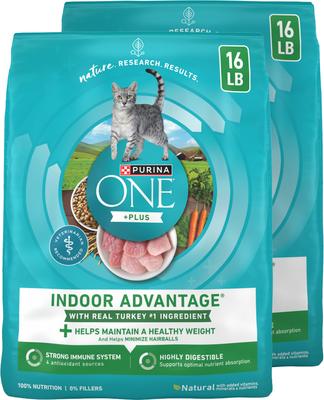
Purina ONE +Plus Indoor Advantage Turkey
from
$65.48
An indoor formula that targets weight control and hairballs with real turkey and added fiber.
Pros
- + Lower fat helps less-active indoor cats maintain a healthy weight
- + Natural fiber and 4 antioxidant sources support hairballs and immune health
Cons
- – Not a high-protein or low-carb species-appropriate formula
- – Some cats need a gradual 7-10 day transition to avoid digestive upset
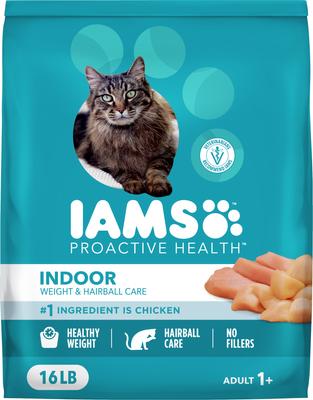
IAMS ProActive Health Indoor Weight Hairball
from
$33.98
A chicken-first kibble built specifically around weight management and hairball reduction.
Pros
- + L-carnitine and reduced fat support healthy weight loss
- + Beet pulp fiber blend helps reduce hairballs and aids digestion
Cons
- – Some reviewers reported recent batch/quality and palatability concerns
- – A few cats experienced vomiting after switching to it
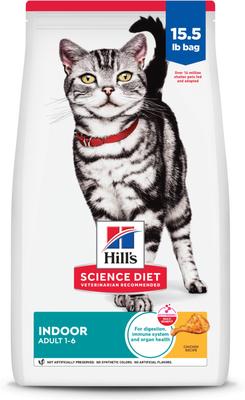
Hill's Science Diet Indoor Chicken
from
$63.99
A vet-trusted indoor formula balancing protein, fats and carbs with gut-healthy prebiotic fibers.
Pros
- + Natural fibers promote healthy digestion and easier litter box clean-up
- + Balanced protein, fats and carbs support steady energy
- + Widely trusted and recommended by veterinarians
Cons
- – Uses corn gluten meal as a protein source, which some owners avoid
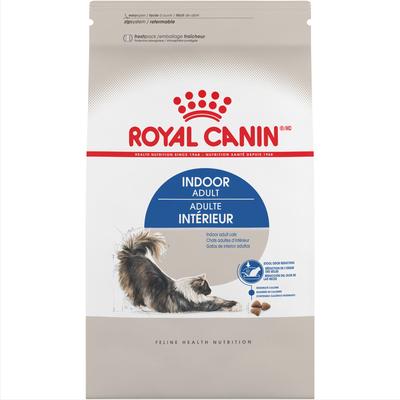
Royal Canin Indoor Adult
from
$23.99
Targeted nutrition for lazy housecats focused on weight, hairballs, stool odor and dental tartar.
Pros
- + Highly palatable—many owners report even picky cats eat eagerly
- + Addresses weight, hairballs, stool odor and dental tartar together
- + Formulated by veterinarians and nutritional experts
Cons
- – Larger kibble size and richness caused digestive upset for some cats
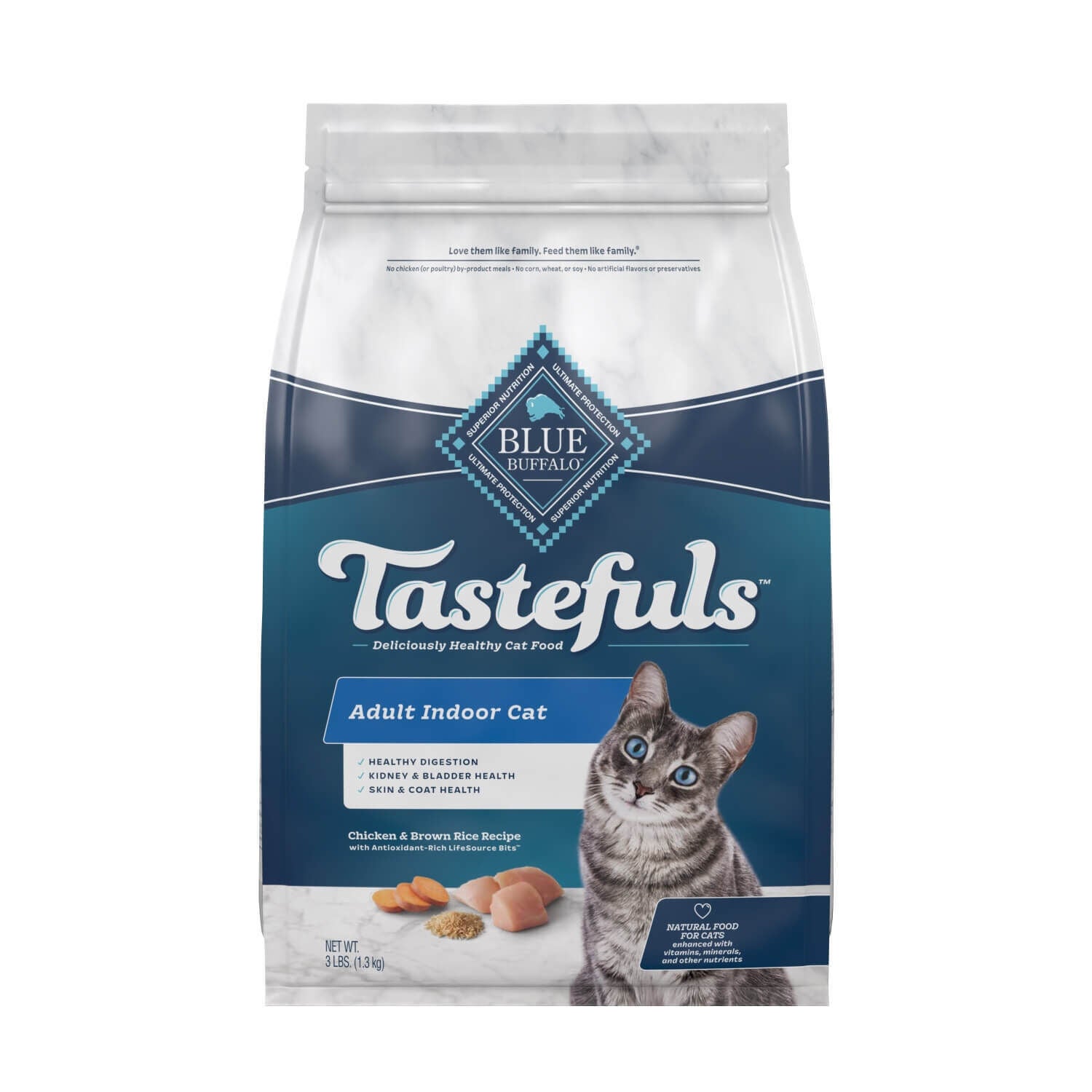
Blue Buffalo Tastefuls Indoor Chicken Brown Rice
from
$14.98
A natural, real-chicken-first indoor recipe with no by-products, corn, wheat or soy plus antioxidant LifeSource Bits.
Pros
- + Real chicken first with no by-product meals, corn, wheat or soy
- + LifeSource Bits add antioxidants for immune support
- + Highly rated and many cats prefer the taste
Cons
- – Pricier than basic grocery kibble
- – Some cats refuse it or had digestive reactions
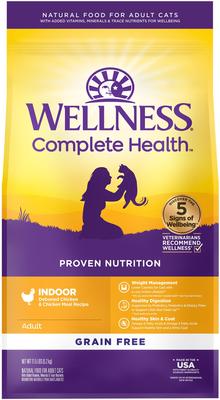
Wellness Complete Health Indoor Chicken Grain-Free
from
$35.19
A grain-free indoor recipe with deboned chicken, added joint support and fiber plus L-carnitine for indoor cats.
Pros
- + Grain-free with glucosamine and chondroitin for joint health
- + Fiber and L-carnitine help support indoor cats' weight
- + Made in USA with non-GMO, trusted ingredients
Cons
- – Not specifically formulated for hairball control
- – Some cats dislike the kibble or refuse it
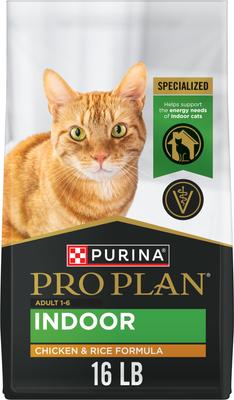
Purina Pro Plan Indoor Chicken Rice
from
$56.48
A high-protein, vet-recommended indoor formula for lean muscle, healthy weight and digestive support.
Pros
- + High protein helps maintain lean muscle and a healthy weight
- + Prebiotic fiber plus taurine, vitamin A and antioxidants
- + Frequently recommended by veterinarians
Cons
- – Contains corn protein meal, wheat flour and soy protein isolate
- – A minority of cats had diarrhea or vomiting
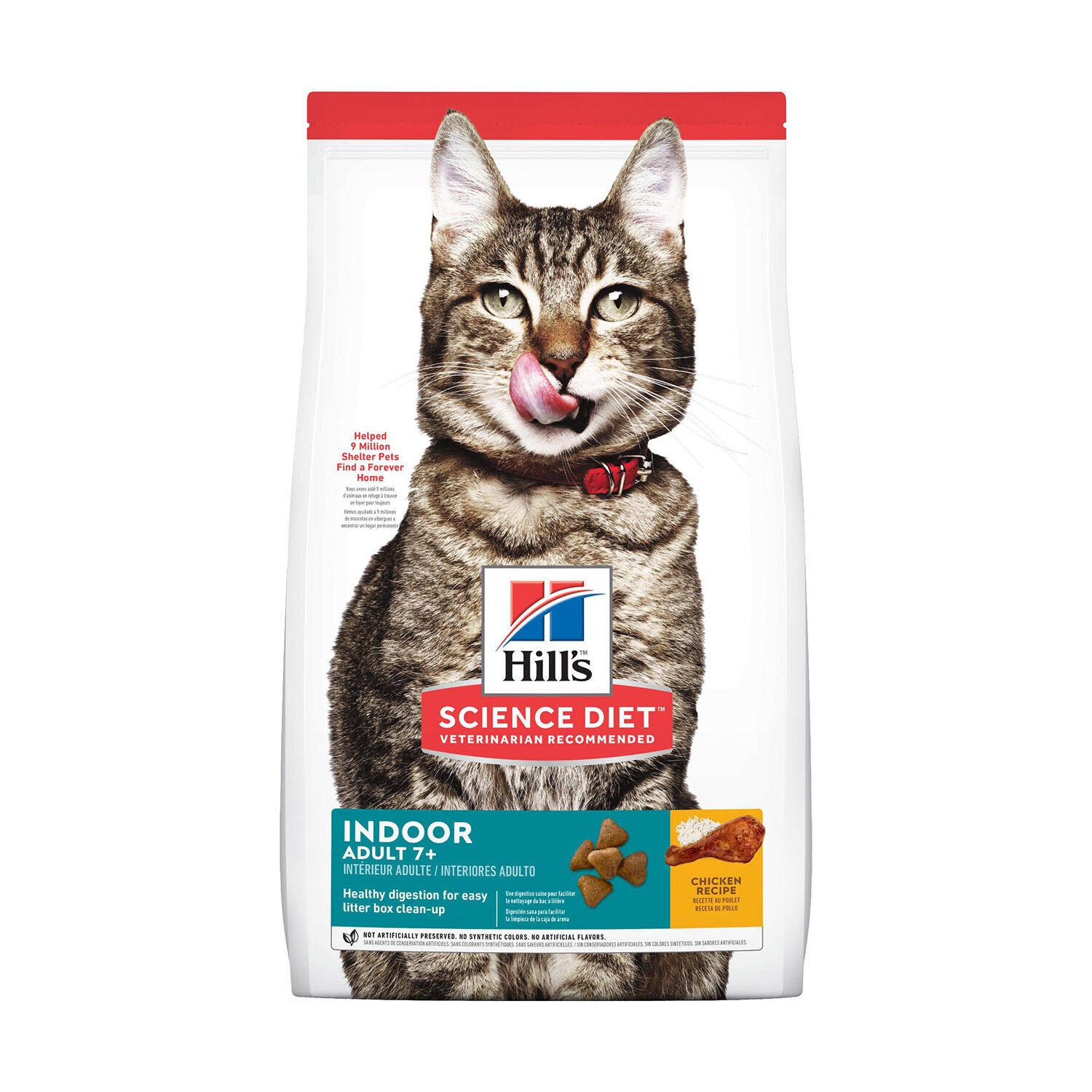
Hill's Science Diet Senior 7+ Indoor Chicken
from
$64.99
Precisely balanced nutrition tailored for older indoor cats with gentle digestion for easy litter box clean-up.
Pros
- + Tailored nutrient profile for aging indoor cats
- + Owners report shinier coats and fewer hairballs
- + Vet-recommended brand for older cats
Cons
- – Larger, firmer kibble may not suit cats with dental issues
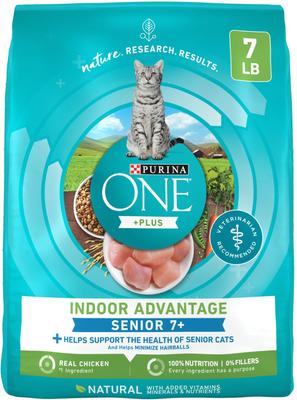
Purina ONE Indoor Senior 7+
from
$17.98
A high-protein senior indoor formula with real chicken first for muscle and whole-body health.
Pros
- + Real chicken first for high protein and muscle support
- + Strongly rated and reported a low failure rate with picky cats
Cons
- – Some cats had temporary stinky/loose stool during transition
- – Not a low-carb or grain-free formula
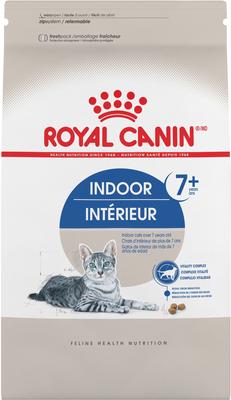
Royal Canin Indoor 7+ Adult
from
$23.99
A small-bag senior indoor formula with adapted phosphorus and a soft kibble that's gentle on aging teeth.
Pros
- + Adapted phosphorus level supports renal health in aging cats
- + Soft kibble is easier on senior gums and teeth
- + Small bag is convenient for trialing with picky seniors
Cons
- – First ingredients are corn, barley and wheat rather than meat, plus soy protein isolate
The verdict
Our top picks at a glance
Owners of indoor cats prone to weight gain and hairballs.
Owners of overweight indoor cats needing a hairball-and-weight management formula.
Owners of adult indoor cats (ages 1-6) who want a widely vet-recommended mainstream brand.
Owners of sedentary indoor cats wanting odor control and tartar-reducing kibble; appeals to picky eaters.
At a glance
How they compare
| Spec | Top pickPurina ONE +Plus Indoor Advantage Turkey | IAMS ProActive Health Indoor Weight Hairball | Hill's Science Diet Indoor Chicken |
|---|---|---|---|
| Price | $65.48 | $33.98 | $63.99 |
| Type | Dry kibble | Dry kibble | Dry kibble (pyramidal-shaped) |
| Fat content | 10% less fat than Purina ONE Tender Selects Blend | 10% less fat than IAMS Healthy Adult Original | — |
| First ingredient | Real turkey | Real chicken | — |
| Check price → | Check price → | Check price → |
Top 3 of 10 shown — full shortlist above.
Choosing good cat food for indoor cats isn’t just about grabbing the bag with the happiest-looking tabby on the front. Indoor cats are less active than their outdoor counterparts, which means they’re prone to weight gain, hairballs from increased grooming, and urinary issues from lower water intake. About 40% of indoor cats are overweight, and the right food does real work here.
Top pick overall: Purina Pro Plan Adult Indoor Chicken & Rice Formula. It leads on protein quality, vet trust, and digestive support at a reasonable price. But if your cat is senior, grain-sensitive, or on a tight budget, a different pick will serve them better. Here’s the full breakdown.
What indoor cats actually need from their food
Cats are obligate carnivores. They need high animal-source protein — at least 26–40% on a dry-matter basis — and they can’t synthesize taurine on their own. Taurine deficiency causes blindness and fatal heart disease, so verify it’s listed as an added ingredient on any food you buy.
Indoor cats typically need 20–30% fewer calories than outdoor cats due to lower activity levels. They also benefit from:
- Added fiber (8–10% vs. 4% in standard foods) to move hairballs through the gut
- Moderate fat to prevent weight creep without sacrificing muscle
- Prebiotic support for digestion and consistent litter box habits
- Taurine, omega-6s, and antioxidants for heart, coat, and immune health
Dry food runs 6–10% moisture, which matters because cats have a low thirst drive. Adding wet food to the rotation — or at least a water fountain — supports kidney function and urinary tract health. Cornell’s College of Veterinary Medicine recommends wet food as part of a balanced indoor cat diet for exactly this reason.
Also check for the AAFCO “complete and balanced” statement on any food you buy. It needs to match your cat’s life stage: adult or senior, not “all life stages” if your cat is a senior with changing nutritional needs.
Best overall: Purina Pro Plan Adult Indoor Chicken & Rice Formula (16-lb, ~$42)
Best for: Owners wanting a vet-recommended higher-protein formula to maintain lean muscle in indoor cats.
This is the one most consistently recommended by vets for healthy adult indoor cats, and the nutrition profile backs that up. Real chicken is the first ingredient, protein is high enough to support lean muscle, and the formula includes natural prebiotic fiber plus taurine and vitamin A.
- High protein supports lean muscle and a healthy weight in less-active cats
- Prebiotic fiber for digestive regularity
- Taurine, vitamin A, and antioxidants for heart, vision, and immune function
- Frequently recommended by veterinarians
Trade-offs: The ingredient list includes corn protein meal, wheat flour, and soy protein isolate — not ideal if you’re avoiding plant proteins. A small percentage of cats had loose stool or vomiting during the switch, so transition gradually over 7–10 days.
Not for: Cats with grain sensitivities or owners committed to grain-free feeding.
Best budget: Purina ONE +Plus Indoor Advantage with Real Turkey (16-lb, ~$28)
Best for: Budget-conscious owners of indoor cats prone to weight gain and hairballs.
At $28 for a 16-lb bag, this is the most affordable pick here that still hits the key indoor-cat boxes: real turkey first, 10% less fat than Purina ONE Tender Selects Blend, and natural fiber for hairball support. Four antioxidant sources round out immune support.
- Real turkey as the first ingredient
- Lower fat profile helps weight-prone indoor cats
- Natural fiber minimizes hairballs
- No artificial flavors or preservatives; made in the USA
Trade-offs: This isn’t a high-protein, low-carb formula — it won’t satisfy owners who want a species-appropriate carb profile. Transition slowly to avoid digestive upset.
Not for: Cats on grain-free or low-carb diets, or owners seeking maximum protein density.
Best for hairball and weight control: IAMS ProActive Health Adult Indoor (16-lb, ~$33.98)
Best for: Owners wanting an affordable hairball-and-weight formula for overweight indoor cats.
IAMS adds L-carnitine to support fat metabolism, which is a meaningful inclusion for sedentary cats carrying extra weight. The beet pulp fiber blend tackles hairballs and aids digestion, and real chicken is the first ingredient.
- L-carnitine and reduced fat (10% less than IAMS Healthy Adult Original) actively support weight loss
- Beet pulp fiber blend reduces hairballs and supports gut health
- Reasonable price with a real-protein-first label
Trade-offs: Some recent owner reviews flag batch-to-batch palatability inconsistency, and a handful of cats vomited after switching. Worth monitoring if your cat is food-sensitive.
Not for: Cats with a history of vomiting or sensitive stomachs that react to formula changes.
Best mainstream vet-recommended: Hill’s Science Diet Adult Indoor Chicken Recipe (15.5-lb, ~$64.99)
Best for: Owners of adult indoor cats (ages 1–6) who want a widely vet-recommended mainstream brand.
Hill’s ActivBiome+ prebiotic fiber technology is a real differentiator here — owners frequently mention noticeably easier litter box clean-up, which reflects genuine digestive improvement. The formula balances protein, fats, and carbs for steady energy without excess calories, and omega-6 fatty acids plus vitamin E support coat health.
- Prebiotic fiber visibly improves digestion and reduces odor
- Balanced macronutrients for stable weight in adult cats
- Omega-6 and vitamin E for skin and coat condition
- One of the most widely trusted brands among veterinarians
Trade-offs: Corn gluten meal appears as a protein source — if you’re prioritizing meat-only protein, that’s a sticking point. Price is also noticeably higher than the budget picks.
Not for: Owners avoiding plant-based protein sources, or those on a tight budget.
Best for picky eaters and odor control: Royal Canin Feline Health Nutrition Indoor Adult (15-lb, ~$64.99)
Best for: Owners of sedentary indoor cats wanting odor control, tartar reduction, and a formula picky cats will actually eat.
Royal Canin’s indoor formula earns its reputation primarily through palatability — picky cats eat it. The triangular kibble shape is designed to encourage chewing and reduce tartar buildup, highly digestible proteins keep stool odor down, and the calorie level is moderate to prevent weight gain.
- Addresses weight, hairballs, stool odor, and dental tartar in a single formula
- Highly palatable — many owners with notoriously fussy cats report success
- Designed by veterinary nutritionists
Trade-offs: Some cats had digestive upset from the richer formula or the larger kibble size. Like Hill’s, it’s premium-priced relative to grocery brands.
Not for: Cats with sensitive stomachs or owners who want meat as the dominant ingredients (the nutrient profile skews toward palatability and digestibility rather than raw protein percentage).
Best natural ingredients: Blue Buffalo Tastefuls Indoor Health (15-lb, ~$49.98)
Best for: Owners prioritizing natural ingredients and avoiding by-products, corn, wheat, and soy.
Deboned chicken leads the ingredient list, and Blue Buffalo excludes chicken by-product meals, corn, wheat, and soy entirely. The LifeSource Bits — small dark kibble pieces scattered through the bag — add a blend of antioxidants, vitamins, and minerals. Crude protein sits at 32% minimum, which is solid for an indoor formula.
- Real deboned chicken first, no by-product meals or common fillers
- 32% minimum crude protein
- LifeSource Bits provide antioxidant and immune support
- Broadly well-rated; many cats show strong preference for the taste
Trade-offs: It’s pricier than the budget options. A small number of cats refused it or had digestive reactions, so it’s worth a smaller bag first if your cat is selective.
Not for: Owners on a tight budget, or cats with a history of refusing Blue Buffalo formulas.
Best grain-free: Wellness Complete Health Grain-Free Indoor (11.5-lb, ~$35.14)
Best for: Owners wanting a grain-free, natural indoor diet, including cats with grain sensitivities.
Wellness uses deboned chicken as the first ingredient and adds chicken meal, which provides glucosamine and chondroitin for joint health — a thoughtful addition for indoor cats that may not move enough to keep joints strong. L-carnitine and fiber address the weight and hairball angles. No corn, soy, meat by-products, or artificial preservatives.
- Grain-free with joint support from glucosamine and chondroitin
- L-carnitine and fiber for indoor weight management
- Made in the USA with non-GMO ingredients
Trade-offs: No specific hairball-control formula focus, and some cats reject the kibble texture. The 11.5-lb bag size is smaller than most competitors at a similar price, making cost-per-pound higher.
Not for: Cats with a hairball problem that needs targeted fiber support, or owners wanting a larger bag for multi-cat households.
Best for senior cats (budget): Purina ONE Indoor Advantage Senior 7+ (16-lb, ~$36.68)
Best for: Budget-minded owners of senior indoor cats (7+) wanting high-protein nutrition.
Real chicken is the first ingredient, and the formula earns a 4.7/5 across nearly 5,000 reviews — which matters when you’re choosing for an older, potentially picky cat. The crunchy triangle and round kibble mix provides some dental benefit. It’s significantly more affordable than the premium senior options.
- Real chicken first, high protein to support aging muscle mass
- Strongly rated with low palatability failure rate
- More affordable than Hill’s or Royal Canin senior formulas
Trade-offs: Not grain-free or low-carb. Some cats had temporary loose or smelly stool during transition, which usually resolves after the switch period.
Not for: Cats with grain sensitivities or kidney concerns requiring adapted phosphorus.
Best for senior cats (premium): Hill’s Science Diet Senior Adult 7+ Indoor (15.5-lb, ~$64.99)
Best for: Owners of senior indoor cats (7+) needing age-appropriate, gentle-digestion nutrition.
The Senior 7+ version of Hill’s indoor formula is specifically calibrated for aging cats — the nutrient balance shifts to support older bodies, and the gentle-digestion formula produces reliably easier litter box clean-up. Owners report shinier coats and fewer hairballs at this life stage.
- Tailored nutrient profile for cats 7 and older
- Gentle digestion formula reduces litter box mess
- Vet-recommended brand with a strong senior track record
Trade-offs: The larger, firmer kibble may be a problem for senior cats with dental issues or tooth loss. Premium price applies.
Not for: Cats with significant dental disease (consider Royal Canin’s softer senior kibble instead).
Best for senior cats with renal concerns: Royal Canin Indoor 7+ (2.5-lb, ~$22)
Best for: Owners of aging indoor cats (7+) wanting renal-conscious nutrition and a gentle kibble to trial in a small bag.
The standout here is the adapted phosphorus level (0.49%), which is relevant for senior cats at risk of kidney disease — a common issue in older cats. The soft kibble breaks down easily, making it gentler on aging gums and teeth than firmer options. The 2.5-lb bag is ideal for trialing with a picky senior before committing to a larger purchase.
- Adapted phosphorus supports renal health in aging cats
- Soft kibble is genuinely easier on senior teeth and gums
- Small bag lowers risk when introducing to a finicky senior
Trade-offs: Corn, barley, and wheat appear before meat in the ingredient list, with soy protein isolate also present. If you want a meat-first senior formula, this isn’t it. Cost per pound is high in the small-bag size.
Not for: Owners prioritizing meat-first ingredient lists, or those buying in bulk.
How to choose the right indoor cat food
Start with life stage. Adult formulas (ages 1–6) and senior formulas (7+) have different nutrient profiles — using the wrong one long-term creates gaps. AAFCO “complete and balanced” labeling for the correct life stage is the baseline check.
Then consider your cat’s specific issues:
- Overweight cats: Look for L-carnitine, reduced fat, and measured calorie content. Don’t cut calories sharply on your own — rapid weight loss triggers hepatic lipidosis (liver disease). Aim for 0.5–1% body weight lost per week and loop in your vet.
- Hairball-prone cats: Prioritize formulas with 8–10% fiber or a dedicated fiber blend (beet pulp, cellulose, psyllium). Most indoor formulas include some hairball support, but the strength varies.
- Picky eaters: Royal Canin’s indoor formulas have the strongest palatability reputation. Wet food toppers can also help persuade resistant cats.
- Grain-sensitive cats: Wellness grain-free or Blue Buffalo (no corn, wheat, soy) are the picks here, though note that well-formulated grain-inclusive foods aren’t inherently harmful for most cats.
- Senior cats with kidney concerns: Royal Canin Indoor 7+ with its adapted phosphorus level is the most targeted option available without a prescription.
Finally, regardless of which food you choose: supplement dry kibble with wet food or a water fountain when possible. Cats have a genuinely low thirst drive, and chronic low-level dehydration is a real contributor to urinary tract and kidney disease over time.
How tall should a cat food bowl be?
For most adult cats, a bowl with 2–4 inches of elevation is comfortable — slightly raised is better than flat on the floor because it reduces neck strain during eating. Cats with arthritis or megaesophagus may benefit from a more elevated stand (4–6 inches), while flat-faced (brachycephalic) breeds like Persians often do better with a very shallow, wide bowl at low height. The shape matters too: wide, shallow dishes prevent whisker fatigue, which can cause some cats to avoid deep or narrow bowls entirely.
Sources
- Feeding Your Cat | Cornell University College of Veterinary Medicine
- The Best Cat Foods for 2026: A Vet Tells All | Healthline
- 9 Best Cat Foods in 2026, Recommended By Vets | PetMD
- Best Cat Food For Indoor Cats - Natural + Nutritious | Bella and Duke
- Cat Diet Guide: What Should I Feed My Cat? | Chewy
- Best Cat Food for Indoor Cats: Complete Guide 2026 | Amin Pet Shop
- What is the Best Cat Food for Your Indoor Cat? | Purina US
- What Cat Food Is Best for Indoor Cats? (2025 Guide) | Best Life 4 Pets
FAQ
Frequently asked questions
- Is dry food alone enough for indoor cats?
- Dry food can be nutritionally complete if it carries an AAFCO 'complete and balanced' statement for your cat's life stage, but it's low in moisture — only 6–10% compared to 75%+ in wet food. Because cats have a low thirst drive, feeding only dry kibble long-term raises the risk of urinary tract disease and kidney problems. Adding wet food a few times a week or providing a water fountain is a practical way to improve hydration without overhauling your cat's diet.
- How many calories does an indoor cat need per day?
- Most adult indoor cats need roughly 20–30% fewer calories than outdoor cats due to lower activity levels — typically 200–300 kcal/day depending on size, age, and whether they're spayed or neutered. Altered cats have slower metabolisms and need fewer calories still. The best approach is to use the feeding guidelines on your chosen food as a starting point, then adjust based on your cat's body condition score, ideally with guidance from your vet.
- Is grain-free cat food better for indoor cats?
- Not necessarily. Cats don't need grains as part of their natural diet, but well-formulated grain-inclusive foods aren't harmful for most cats. The more important factors are whether real animal protein is the first ingredient, whether taurine is included, and whether the calorie density suits your cat's activity level. Grain-free kibbles tend to be calorie-dense, which can actually contribute to weight gain in already-sedentary indoor cats if portions aren't controlled.
- When should I switch my cat to a senior indoor formula?
- Most manufacturers and veterinarians recommend transitioning to a senior formula around age 7. Senior cats have different nutritional needs — they may need more easily digestible protein to maintain muscle mass and, in some cases, adapted phosphorus levels to protect kidney function. If your cat is 7 or older and still eating an adult formula, it's worth discussing the switch with your vet, particularly if you've noticed any changes in weight, coat condition, or litter box habits.
- Is cat food bad for dogs?
- Cat food isn't toxic to dogs, but it's formulated for a completely different nutritional profile — it's much higher in protein and fat than dogs need. Feeding a dog cat food regularly can lead to weight gain, pancreatitis, and digestive upset. An occasional accidental nibble is unlikely to cause harm, but cat food should never replace or regularly supplement a dog's diet.