Buying guide
Best Cat Food for Sensitive Stomach in 2026
By Willa Hartley · Senior writer
Last updated
We earn commissions from links on this page, at no cost to you. Our picks stay independent. Prices are indicative and were last checked around publication — they change often, so confirm the current price on the retailer’s site. How we research & rank →
Our picks
Ranked, with the trade-offs

Hill's Science Diet Sensitive Stomach Chicken Rice
from
$67.99
Vet's #1 recommended brand offering triple support for stomach, skin and immune health in a highly digestible kibble.
Pros
- + Highly digestible formula with prebiotic fiber that's gentle on the stomach for optimal nutrient absorption
- + Triple support targeting stomach, skin, and immune system simultaneously
- + Backed by the brand U.S. veterinarians recommend most, making it easy to find and trust
Cons
- – Contains rice/grain, so not suitable for cats needing a grain-free diet
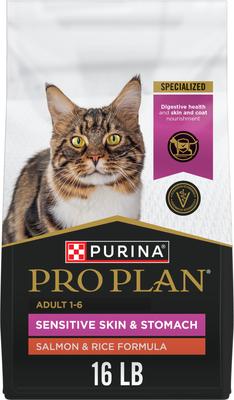
Purina Pro Plan Sensitive Skin Salmon Rice
from
$56.48
Salmon-first kibble with added live probiotics and prebiotic fiber for cats with sensitive systems.
Pros
- + Made with real salmon as the top ingredient for high-quality protein
- + Includes added live probiotics plus natural prebiotic fiber to support gentle digestion
- + Omega fatty acids help nourish skin and coat for sensitive cats
Cons
- – Contains corn protein meal and soybean meal, which some sensitive cats may not tolerate

Purina ONE +Plus Sensitive Skin Stomach
from
$34.46
Turkey-first kibble with prebiotic fiber and no artificial flavors or preservatives.
Pros
- + Real turkey is the first ingredient, creating a high-protein recipe that supports strong muscles
- + Highly digestible and loaded with prebiotic fiber with no artificial flavors or preservatives
Cons
- – Contains corn and chicken by-product meal, so it won't suit cats sensitive to those ingredients
- – Not grain-free

Royal Canin Digestive Care Adult
from
$42.99
Targeted digestive formula with ring-shaped kibble that slows fast eaters who scarf and regurgitate.
Pros
- + Proven effective after 10 days with over 95% healthy stool quality in the brand's internal study
- + Exclusive ring-shaped kibble encourages slower eating to support healthy digestion
- + Highly digestible proteins plus prebiotics support the intestinal tract
Cons
- – Ingredient list includes wheat, corn and by-product meal that some owners avoid
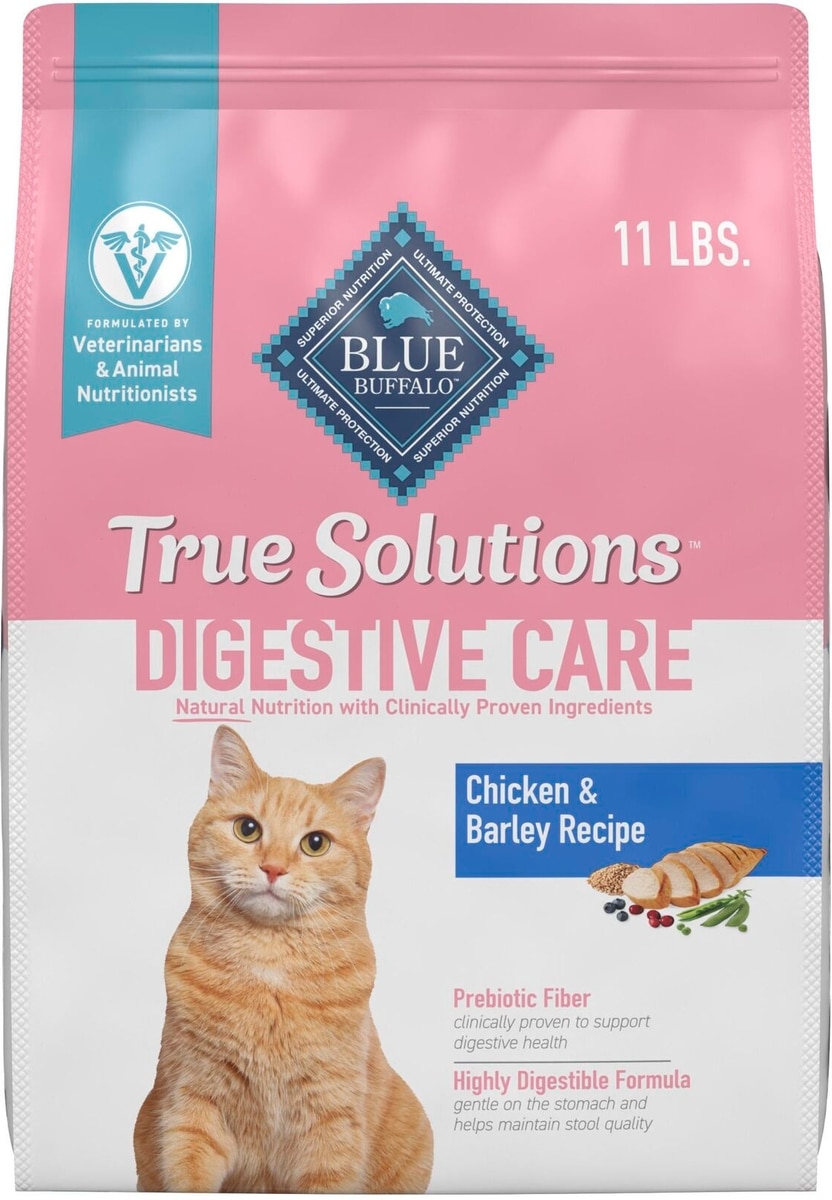
Blue Buffalo True Solutions Blissful Belly
from
$47.98
Chicken-first digestive formula with clinically proven prebiotic fiber and no corn, wheat, or soy.
Pros
- + Contains a prebiotic fiber clinically proven to support digestive health and stool quality
- + Made with no chicken by-product meals and no corn, wheat, or soy
- + Includes antioxidant-rich LifeSource Bits for immune support
Cons
- – Recipe was renamed/reformulated, and some longtime users felt the older Blissful Belly worked better
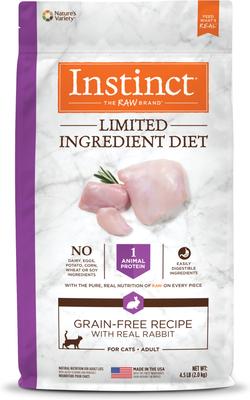
Instinct Limited Ingredient Rabbit Grain-Free
from
$36.99
Single novel-protein limited-ingredient kibble built for cats with food sensitivities and allergies.
Pros
- + Purposefully short ingredient list with just one animal protein and one vegetable for sensitive cats
- + Made with novel, easily digestible rabbit that provides all essential amino acids
- + Avoids nearly all common allergens including chicken, fish, grain, dairy and eggs
Cons
- – High oil/fat content means it can promote weight gain if fed as the sole diet
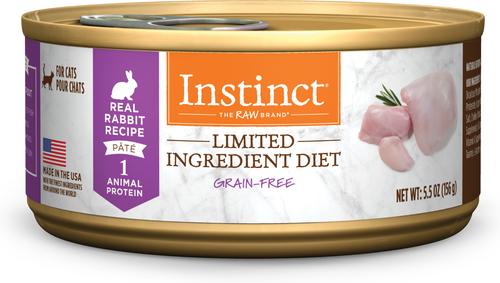
Instinct Limited Ingredient Rabbit Grain-Free Pate
from
$50.08
High-moisture single-protein pate for sensitive cats who need a hydrating, allergen-limited wet food.
Pros
- + Made with one easily digestible animal protein and one vegetable for cats with food sensitivities
- + Free from carrageenan, gums, grains, and many common allergens
- + High-moisture pate adds hydration that supports digestion
Cons
- – Some owners and rescues report cats refusing the smell/taste
- – Buying by the case is a higher upfront cost
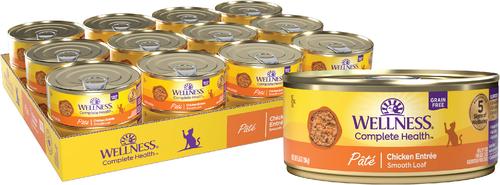
Wellness Complete Health Chicken Grain-Free
from
$67.92
Grain-free chicken pate with high moisture that many owners credit for resolving chronic loose stools.
Pros
- + 100% grain-free recipe with chicken as the first ingredient for lean-muscle protein
- + High moisture content supports hydration and easier digestion
- + Many owners report it cleared up chronic diarrhea where other foods failed
Cons
- – Costs more than mainstream grocery wet foods
- – A small number of cats have reported digestive upset or refusal
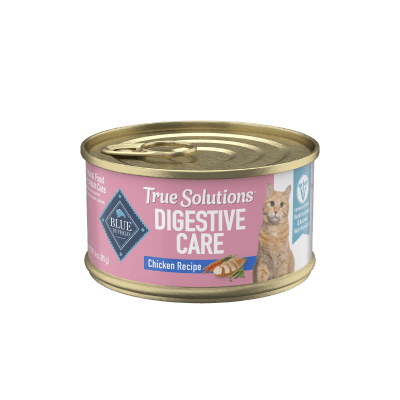
Blue Buffalo True Solutions Blissful Belly Wet
from
$1.48
Chicken-and-potato wet food with prebiotic fiber for everyday digestive support.
Pros
- + Highly digestible recipe with prebiotic fiber clinically proven to support digestive health
- + Uses easily digestible potatoes and flaxseed for omega-3s
Cons
- – Small 3 oz can means many cans needed daily for a full diet
- – Recipe was renamed to Digestive Care, which confused some repeat buyers
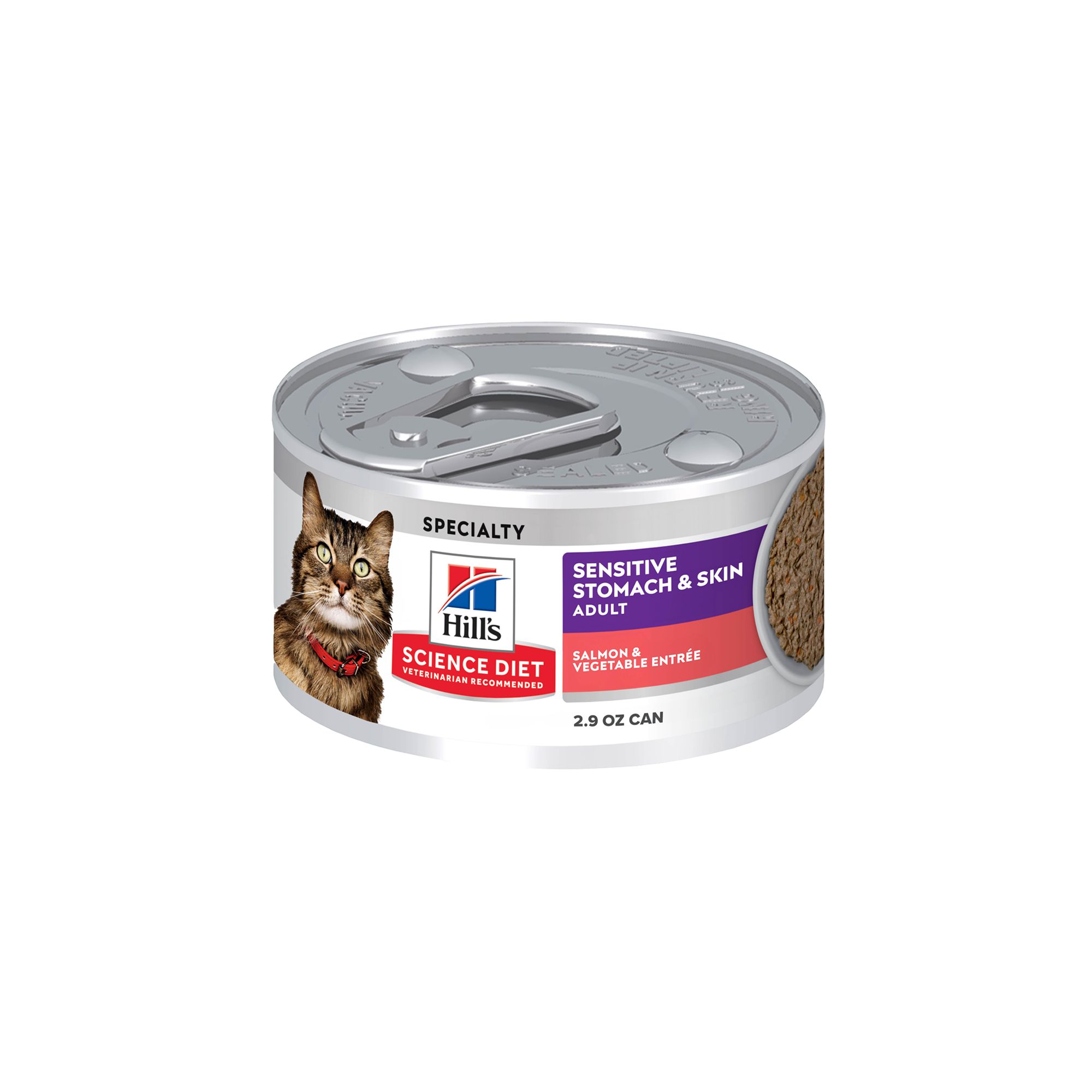
Hill's Science Diet Sensitive Stomach Chicken Vegetable
from
$1.98
Grain-free wet entrée pairing the trusted Science Diet sensitive formula with high-moisture nutrition.
Pros
- + Highly digestible ingredients with prebiotic fiber that fuel beneficial gut bacteria
- + Enriched with Vitamin E and Omega-6 plus clinically shown antioxidants for skin and immune support
- + Pairs with the matching dry formula so you can feed the same nutrition in wet and dry forms
Cons
- – Small 2.9 oz cans mean higher cost to feed exclusively wet
- – Chicken-based, so unsuitable for cats with poultry sensitivities
The verdict
Our top picks at a glance
Owners who want a science-backed, widely available non-prescription option that also addresses skin/co…
Cats who do better on fish protein and owners wanting added live probiotics for gut health.
Owners seeking a mainstream sensitive-stomach option for their cats.
Cats that gulp their food and regurgitate, where stool quality is the main concern.
At a glance
How they compare
| Spec | Top pickHill's Science Diet Sensitive Stomach Chicken Rice | Purina Pro Plan Sensitive Skin Salmon Rice | Purina ONE +Plus Sensitive Skin Stomach |
|---|---|---|---|
| Price | $67.99 | $56.48 | $34.46 |
| Type | Dry kibble | Dry kibble | Dry kibble |
| Extras | Vitamin E + Omega-6 for skin/coat | Omega fatty acids for skin/coat | — |
| Bag size | 15.5 lb | 16 lb | 16 lb |
| Main protein | Chicken | Salmon (first ingredient) | Turkey (first ingredient) |
| Check price → | Check price → | Check price → |
Top 3 of 10 shown — full shortlist above.
The short answer
Hill’s Science Diet Adult Sensitive Stomach & Skin Chicken & Rice Recipe is the best all-around pick for most cats with digestive sensitivity. It’s the formula veterinarians recommend most often for this exact problem, it pairs prebiotic fiber with skin-and-coat support, and it’s easy to find in nearly any pet store. If your cat gulps food and regurgitates, Royal Canin Digestive Care’s ring-shaped kibble solves a different problem and is worth a look instead. If you suspect a true food allergy rather than general sensitivity, skip straight to the Instinct Limited Ingredient rabbit recipes.
A quick note on terminology, because it matters for shopping: “sensitive stomach” isn’t a diagnosis, it’s a symptom set (vomiting, loose stool, gas, occasional constipation). True food allergies affect less than 1% of cats seen by vets. Most digestive upset traces back to fat content, fiber balance, stress, or a protein the cat has simply eaten too much of over the years. That distinction is why this list includes both highly digestible “GI support” formulas and true limited-ingredient diets. They solve different problems.
Hill’s Science Diet Adult Sensitive Stomach & Skin Chicken & Rice Recipe — best overall
Best for: owners who want a science-backed, widely available non-prescription option that also addresses skin/coat issues.
- Type: Dry kibble, 15.5 lb bag
- Main protein: Chicken
- Key feature: Prebiotic fiber for gut microbiome, plus Vitamin E and Omega-6 for skin/coat
This is the brand vets recommend most often in the U.S. for GI issues, and the formula backs that up with a highly digestible recipe plus prebiotic fiber to feed beneficial gut bacteria. It tackles stomach, skin, and immune support together, which is useful since sensitive stomachs and flaky skin often show up in the same cat. The catch: it contains rice, so it’s not an option if you’re trying to rule out grain entirely.
Purina Pro Plan Adult Sensitive Skin & Stomach Salmon & Rice Formula — best for fish-preferring cats
Best for: cats who do better on fish protein and owners wanting added live probiotics for gut health.
- Type: Dry kibble, 16 lb bag
- Main protein: Salmon (first ingredient)
- Gut support: Added live probiotics plus prebiotic fiber
Salmon as the top ingredient makes this a solid swap for cats who don’t tolerate chicken well, and the live probiotics are a genuine differentiator versus formulas that rely on prebiotic fiber alone. It’s also one of the better-value options in this list relative to bag size. The downside is the inclusion of corn protein meal and soybean meal, both of which show up on “ingredients to avoid” lists for sensitive cats, so it’s not the cleanest label here even though the core recipe works for many.
Purina ONE +Plus Sensitive Skin & Stomach — best budget pick
Best for: owners seeking a mainstream sensitive-stomach option without paying a premium.
- Type: Dry kibble, 16 lb bag
- Main protein: Turkey (first ingredient)
- Gut support: Added prebiotic fiber, no artificial flavors or preservatives
This is the cheapest bag on the list by a wide margin, and it still leads with real turkey and prebiotic fiber. It’s a reasonable first thing to try if your cat’s issue is mild and you don’t want to commit to a pricier formula right away. It does contain corn and chicken by-product meal, so it’s not built for cats you suspect have an actual allergy, just general digestive sensitivity.
Royal Canin Feline Care Nutrition Digestive Care — best for cats that scarf and barf
Best for: cats that gulp their food and regurgitate, where stool quality is the main concern.
- Type: Dry kibble, 6 lb bag
- Kibble: Exclusive ring shape designed to slow eating
- Gut support: Prebiotics plus dietary fiber
The ring-shaped kibble is the whole point of this formula: it physically forces fast eaters to slow down, which reduces the classic “eat too fast, throw up minutes later” pattern. Royal Canin’s internal study reported over 95% healthy stool quality after 10 days of feeding, a meaningfully fast turnaround. The tradeoffs are a smaller bag for the price and an ingredient list that includes wheat, corn, and by-product meal, ingredients some owners actively avoid.
Blue Buffalo True Solutions Blissful Belly Digestive Care Dry — best by-product-free option
Best for: owners wanting a natural, by-product-free kibble that’s still vet-formulated for digestive support.
- Type: Dry kibble, 11 lb bag, 34% min crude protein
- Main protein: Real chicken (first ingredient)
- Free from: Corn, wheat, soy, by-product meals
This formula uses a prebiotic fiber clinically shown to support digestive health and stool quality, and it skips corn, wheat, soy, and by-product meals entirely, appealing if you’re trying to strip out common irritants without going full limited-ingredient. Worth knowing before you buy: this recipe was renamed and reformulated from an earlier Blissful Belly version, and some longtime users say the original worked better for their cats. Worth a trial bag before committing to a full case of the matching wet food.
Instinct Limited Ingredient Diet Real Rabbit (Dry) — best for suspected allergies
Best for: cats with suspected chicken or common-protein allergies who need a true elimination-diet kibble.
- Type: Raw-coated dry kibble, 4.5 lb bag (also available in 10 lb)
- Recipe: One animal protein (rabbit) plus one vegetable
- Free from: Grain, dairy, egg, chicken, beef, fish, soy
Since chicken, beef, and fish are among the most common feline allergens, a rabbit-based limited-ingredient diet gives a genuinely novel protein your cat likely hasn’t built a sensitivity to. This is the closest thing on this list to a real elimination-diet food, and it’s built for cats where sensitive-stomach formulas haven’t worked. Elimination trials need 2-4 weeks minimum to show results, and full system clearance can take 3-4 months, so don’t judge this food on a one-week trial. It’s also fairly high in fat, so watch weight if you feed it as the sole diet long-term.
Instinct Limited Ingredient Diet Real Rabbit (Wet Pate) — best wet option for allergy cats
Best for: cats with IBD or allergies who need a moisture-rich, true limited-ingredient wet diet.
- Pack: 5.5 oz cans, case of 12
- Recipe: One animal protein (rabbit) plus one vegetable
- Free from: Carrageenan, guar/xanthan gum, grains, common allergens
This is the wet-food companion to the dry rabbit recipe above, and it adds the hydration benefit that dry kibble can’t offer, useful since added moisture generally makes food easier to digest. It also cuts carrageenan and gum thickeners, both flagged as potential GI irritants in sensitive cats. The tradeoffs: some owners and rescues report cats turning their nose up at the smell, and buying a full case is a bigger upfront spend than a single trial can.
Wellness Complete Health Pate Chicken Entrée — best for transitioning off dry food
Best for: cats with sensitive digestion who do best moving from dry kibble to a high-moisture wet diet.
- Diet: 100% grain-free, 5.5 oz cans, case of 24
- Main protein: Chicken (first ingredient)
- Macros: roughly 39% protein, 60% fat calories
Owners frequently credit this one with clearing up chronic loose stools that other foods didn’t fix, which tracks with the general finding that moisture-rich diets are easier on sensitive GI tracts than dry kibble. It’s a pricier way to feed full-time compared to grocery-store wet foods, and a small share of cats have reported upset or outright refusal, so it’s worth a single case before buying in bulk.
Blue Buffalo True Solutions Blissful Belly Digestive Care (Single Can) — best low-commitment trial
Best for: owners wanting a single-can wet food to test before committing to a full case.
- Type: Wet pate, 3 oz can
- Carb source: Whole fresh potatoes
- Gut support: FOS prebiotic fiber
Since diet trials take weeks to show results and cats can be picky about texture, testing a single can before buying a case just makes sense. This one uses easily digestible potatoes and flaxseed rather than grain, with FOS prebiotic fiber for gut support. The 3 oz size means you’d need several cans a day to feed exclusively wet, and the recipe’s rename to “Digestive Care” from Blissful Belly has confused some repeat buyers looking for the old label.
Hill’s Science Diet Sensitive Stomach & Skin Chicken & Vegetable (Wet) — best matching wet food
Best for: owners feeding the Hill’s dry formula who want a matching wet option for added moisture and variety.
- Diet: Grain-free, 2.9 oz can
- Main protein: Chicken
- Gut support: Prebiotic fiber for GI biome
If you’ve already settled on the Hill’s dry formula as your top pick, this wet entrée lets you feed the same nutritional approach (prebiotic fiber, Vitamin E, Omega-6) in a higher-moisture form for variety or topper use. The small can size makes it an expensive way to feed exclusively wet, and being chicken-based, it’s not an option if your cat’s sensitivity turns out to be a poultry allergy.
How to choose the right one
Match the food to what’s actually happening, not just the words “sensitive stomach” on the bag:
- Vomiting right after meals, food looks undigested: this is usually eating too fast, not the food itself. Royal Canin’s ring-kibble or simply switching to smaller, more frequent meals often solves it, since cats are physiologically built for multiple small meals rather than one or two large ones.
- Chronic loose stool or diarrhea: look first at fat and fiber levels. Highly digestible formulas in the 1-8% crude fiber range (most foods on this list) support healthy stool without overloading the gut. Adding moisture via wet food often helps here too.
- Suspected allergy (itchy skin, recurring GI issues despite diet changes): move to a true limited-ingredient diet with a novel protein like rabbit. Give it a real trial: 2-4 weeks minimum, and don’t expect full clearance of old symptoms for 3-4 months.
- Any switch: transition over 7-10 days, mixing old and new food gradually. A sudden switch is one of the most common causes of GI upset blamed on the new food when the real culprit is the abrupt change itself.
If symptoms are severe, persistent, or include weight loss, that’s a vet visit, not a shopping decision. Prescription gastrointestinal diets and hydrolyzed-protein formulas exist for a reason, and they’re formulated differently from anything sold over the counter.
How long does it take a cat to digest food?
A cat’s digestive transit time is typically around 10 to 24 hours from eating to elimination, though it varies with fiber content, fat level, and the individual cat. Highly digestible formulas, the kind built for sensitive stomachs, tend to move through the GI tract more efficiently and produce firmer, more consistent stool. Dry, high-fiber, or high-fat foods generally take longer to process than moisture-rich wet food.
Is cat food bad for dogs?
Cat food isn’t toxic to dogs in small amounts, but it’s not formulated for them and isn’t a safe regular diet. It’s much higher in protein and fat than dog food, and repeated snacking on it can contribute to pancreatitis or obesity in dogs over time. An occasional bite from the cat’s bowl isn’t an emergency, but dogs shouldn’t be fed cat food as a meal replacement.
Best height for a cat food bowl
Most cats do fine with a bowl placed directly on the floor, but a raised bowl (roughly 3-4 inches off the ground) can help cats with arthritis, obesity, or megaesophagus-type regurgitation issues. There’s no universal “correct” height backed by strong veterinary consensus; it’s more about the individual cat’s comfort and any existing health conditions. If your cat’s sensitive stomach comes with regurgitation, a slightly elevated, wide, shallow bowl (to avoid whisker fatigue) is worth trying alongside a slow-feed kibble like Royal Canin’s ring-shaped formula.
Bottom line
For most cats, Hill’s Science Diet Sensitive Stomach & Skin is the safest starting point: broadly available, backed by the most vet recommendations, and built around the digestibility and prebiotic-fiber approach that the evidence supports. Move to Royal Canin Digestive Care if the issue is specifically fast eating and regurgitation, and skip straight to the Instinct rabbit line if you suspect an actual allergy rather than general sensitivity. Whatever you pick, give it a real trial period and transition slowly. A week isn’t enough time to judge a gut.
Sources
- Best Cat Foods for Sensitive Stomachs | PetMD
- Cat Food for Sensitive Stomachs | Boat to Bowl Pet Food
- What Is The Best Cat Food for Sensitive Stomachs
- Why Your Cat Has a Sensitive Stomach [According to Veterinarians] – The Honest Kitchen
- Evaluation of Two Dry Commercial Therapeutic Diets for the Management of Feline Chronic Gastroenteropathy
- Best Cat Food for Sensitive Stomachs 2026 [Vet Reviewed] | Pet Circle
- Happy Tummy, Happy Cat: Our Top Sensitive Stomach Food Choices | BaxterBoo
- What Ingredients Are Bad for Dogs and Cats? [2025 Guide] – KOHA Pet
FAQ
Frequently asked questions
- Is cat food good for dogs?
- No, it isn't a good regular food for dogs even though it's not immediately dangerous. Cat food is formulated with much higher protein and fat levels than dogs need, and consistent feeding can lead to weight gain or pancreatitis. Stick to dog food for dogs and treat any cat-food snacking as an occasional accident, not a diet plan.
- How long does it take a cat to digest food?
- Roughly 10 to 24 hours, depending on the food's fiber and fat content and the individual cat's gut health. Highly digestible sensitive-stomach formulas typically move through faster and more predictably than high-fat or high-fiber diets, which is part of why digestibility is the key spec to check for cats with GI issues.
- What height should a cat food bowl be?
- Floor-level is fine for most healthy cats, but a raised bowl around 3-4 inches high can help cats with arthritis, obesity, or a tendency to regurgitate after eating. There's no single correct height for every cat; it depends on mobility and any digestive symptoms. Pair a raised, shallow, wide bowl with a slow-feed kibble if your cat scarfs and vomits.
- How do I know if my cat has a true food allergy versus a sensitive stomach?
- True food allergies are uncommon, affecting less than 1% of cats seen by vets, and usually show up as itchy skin alongside GI symptoms. A general sensitive stomach causes vomiting, loose stool, or gas without an immune reaction. The only reliable way to tell them apart is a proper elimination diet trial with a novel or hydrolyzed protein, run for several weeks under a vet's guidance.