Buying guide
Best Budget-Friendly Wet Cat Food: 10 Picks Ranked by Value (2026)
By Mara Ellison · Senior reviews editor
Last updated
We earn commissions from links on this page, at no cost to you. Our picks stay independent. Prices are indicative and were last checked around publication — they change often, so confirm the current price on the retailer’s site. How we research & rank →
Our picks
Ranked, with the trade-offs
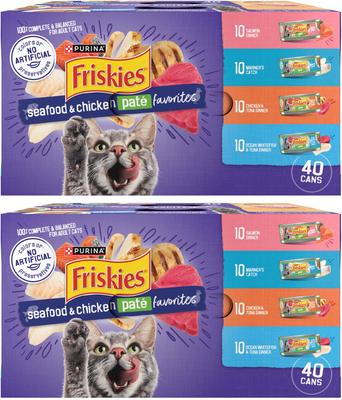
Friskies Seafood Chicken Pate Favorites
from
$65.52
One of the cheapest per-ounce complete-and-balanced wet foods, with big 5.5-oz cans and lots of flavor variety.
Pros
- + Among the most affordable per-ounce wet foods on the market
- + Big 5.5-oz cans feed multiple cats per can
- + Wide flavor variety that most cats readily eat
Cons
- – Lower-rated by strict nutritional metrics than premium brands
- – Some buyers report dented/damaged cans on delivery
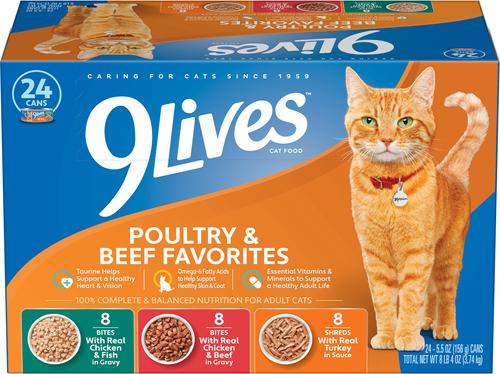
9Lives Poultry Beef Favorites
from
$16.78
Rock-bottom-priced large-can wet food offering complete nutrition for the most cost-conscious shoppers.
Pros
- + One of the lowest prices per ounce available
- + Big cans and multiple flavors in one pack
- + Widely available at Walmart for easy pickup
Cons
- – Budget ingredient quality with by-products and sauces
- – Not a high scorer for ingredient quality
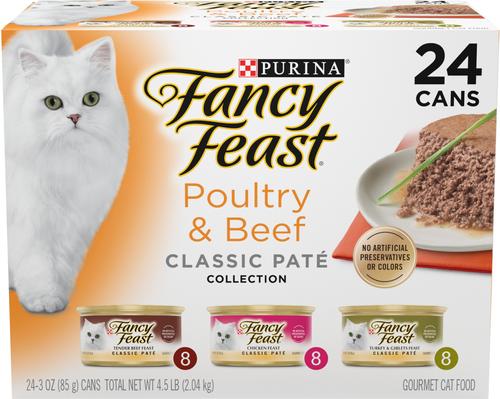
Fancy Feast Classic Poultry Beef Pate
from
$22.86
A gourmet-tasting, low-carb pate in single-serve cans that even very picky cats reliably eat.
Pros
- + Very low-carbohydrate pate good for indoor cats
- + Real chicken, turkey, or beef as the #1 ingredient
- + Highly palatable to finicky eaters
Cons
- – Small 3-oz cans require opening several per day for multi-cat homes
- – Contains meat by-products
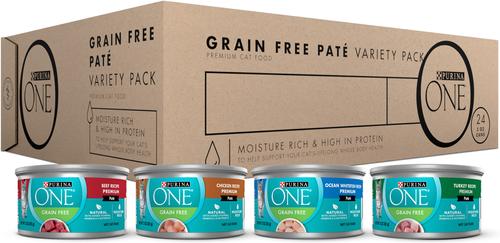
Purina ONE Grain-Free Variety Pack
from
$31.27
A high-protein, grain-free, by-product-free pate from a vet-recommended brand at a still-affordable price.
Pros
- + Real meat first ingredient with no by-products in this variety pack
- + Grain-free and high-protein for the price
- + Backed by a veterinarian-recommended brand
Cons
- – Some owners report recipe inconsistency between batches
- – Small 3-oz cans aren't cost-efficient for multiple cats
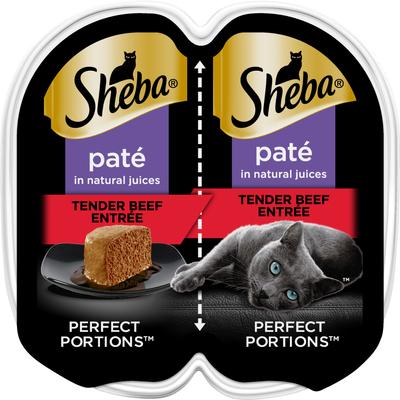
Sheba Perfect Portions Turkey Pate
from
$33.36
Twin-pack snap-and-serve trays that deliver fresh single portions with no messy leftovers.
Pros
- + Portioned twin-pack trays keep every meal fresh with zero waste
- + Smooth pate accepted well by picky cats
- + Decent meat content versus other low-cost brands
Cons
- – Trays can be hard to open, especially for those with arthritis
- – Generates more plastic waste than cans
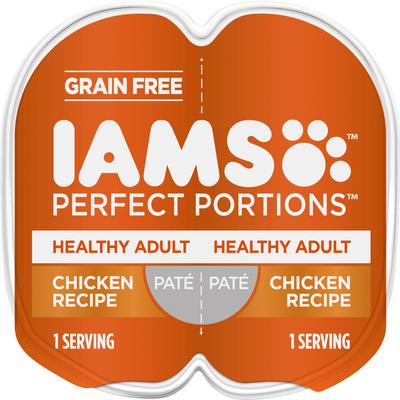
IAMS Perfect Portions Chicken Pate Grain-Free
from
$32
A 4-star-rated, grain-free twin-pack pate with added heart, immune, vision, and coat support nutrients.
Pros
- + Earned a 4-star (above-average) budget rating from reviewers
- + Fortified with taurine, omegas, and antioxidants
- + Convenient portioned trays usable on their own or as a topper
Cons
- – Single-flavor case offers no variety
- – Trays can be tough to peel open
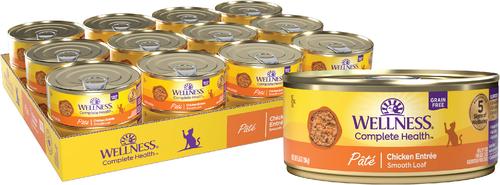
Wellness Complete Health Chicken Grain-Free
from
$67.92
A premium-end 'budget' pick with real chicken first, no carrageenan, and very low carbohydrates.
Pros
- + Real chicken first ingredient with no carrageenan or artificial additives
- + Very low carbohydrate, good for diabetic and sensitive cats
- + Highly rated for ingredient quality
Cons
- – Among the pricier options here as quality costs more
- – Some cats reject the plain-chicken flavor
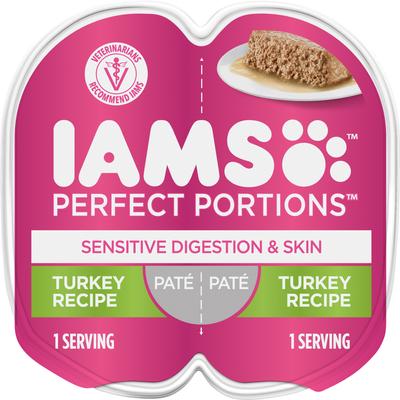
IAMS Perfect Portions Turkey Sensitive
from
$35.04
A targeted twin-pack pate with prebiotics and beet pulp aimed at digestion and skin/coat health.
Pros
- + Prebiotics and fiber blend formulated for digestive support
- + Omega fatty acids target skin and coat health
- + Very low-carb, portioned, grain-free trays
Cons
- – Contains carrageenan in the recipe
- – Single turkey flavor limits variety
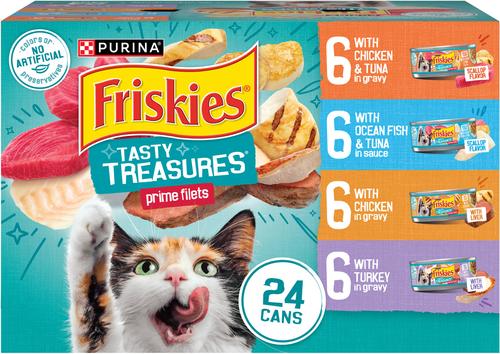
Friskies Tasty Treasures Prime Filets
from
$17
A budget gravy-and-filets variety pack for cats that prefer saucy textures over pate.
Pros
- + Gravy texture appeals to cats that snub pate
- + Inexpensive large-can format
- + Multiple flavors keep mealtime varied
Cons
- – Cats may lick the gravy and leave the chunks
- – Lower ingredient-quality rating than premium foods
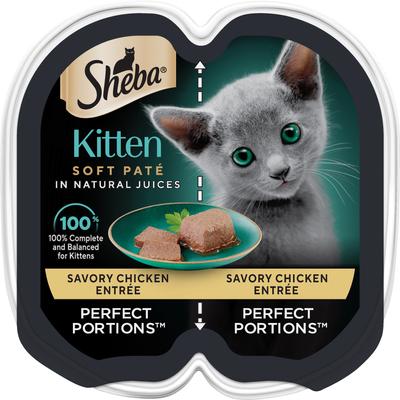
Sheba Perfect Portions Kitten Chicken
from
$30.72
A kitten-specific soft pate with DHA and vitamin E in convenient fresh single-serve trays.
Pros
- + Formulated specifically for kittens with DHA and vitamin E
- + Extra-smooth texture works well for weaning kittens
- + Single-serve trays keep each portion fresh
Cons
- – Trays can be difficult to open
- – Only available in limited flavors
The verdict
Our top picks at a glance
Multi-cat homes and budget-stretching feeders who need high volume at the lowest cost
Shoppers on the tightest budget who want big cans at warehouse prices
Picky eaters and single-cat households wanting fresh single-serve portions
Owners wanting a step-up natural recipe (no by-products, all life stages) without going premium
At a glance
How they compare
| Spec | Top pickFriskies Seafood Chicken Pate Favorites | 9Lives Poultry Beef Favorites | Fancy Feast Classic Poultry Beef Pate |
|---|---|---|---|
| Price | $65.52 | $16.78 | $22.86 |
| Notable | Made without artificial colors or preservatives | — | Grain-free; no artificial colors or preservatives |
| Texture | Pate | Pate/ground in sauce | Smooth pate |
| Can size | 5.5 oz | 5.5 oz | 3 oz |
| Nutrition | 100% complete & balanced for adult cats | 100% complete for kittens & adult maintenance | — |
| Check price → | Check price → | Check price → |
Top 3 of 10 shown — full shortlist above.
Wet food is the pricier way to feed a cat. Tufts University put the daily cost of wet food for a 10-lb cat at $1.22 to $5.77, versus $0.23 to $0.97 for dry. So “budget-friendly” here means getting that essential moisture into your cat without paying premium prices, while still meeting the basics that matter: an AAFCO complete-and-balanced statement, named animal protein, and enough taurine.
My top pick for most multi-cat homes is the Friskies Seafood & Chicken Pate Variety Pack at around $30 for 48 large cans. It isn’t the highest-rated food on ingredient quality, but the per-ounce cost is hard to beat and most cats eat it without complaint. If you want a cleaner step-up recipe, Purina ONE Grain-Free is the smarter buy. And if your cat has a sensitive stomach or diabetes, skip the rock-bottom picks and read the Wellness section.
Below, every pick is rated on the same criteria. I researched specs, owner reviews, and vet-nutrition consensus rather than feeding any of these myself, so treat this as the comparison-shopping version, not a taste test.
What actually matters in a budget wet food
Before the picks, here’s the short version of what separates a fine cheap food from a bad one:
- AAFCO statement. Every food below is labeled complete and balanced for some life stage. That’s the floor, not a luxury. Check the can.
- Named protein early. Chicken, turkey, beef, or fish in the first few ingredients beats vague “meat by-products.” Budget foods lean on by-products more, which is the main quality trade-off.
- Taurine. Canned food needs at least 2000 mg/kg. Cats can’t make their own, and deficiency causes heart failure and blindness within months. Complete-and-balanced foods cover this, which is exactly why the AAFCO line matters on cheap brands.
- Moisture. All wet food runs 75 to 85% water, and that’s the whole point. It supports kidney and urinary health in a way kibble can’t.
- Watch the fillers and additives. Corn, wheat, and soy as primary ingredients add carbs an obligate carnivore doesn’t need. Carrageenan and gums are debated and can upset sensitive cats.
Price is not a reliable quality signal. A $16 case can be AAFCO-compliant with named protein; a pricier one can still be carb-heavy. Read the label, not the sticker.
Friskies Seafood & Chicken Pate Variety Pack — best for multi-cat homes
Around $30 / case of 48 (5.5-oz cans). This is the volume play. Forty-eight big cans at one of the lowest per-ounce prices on the market, with enough flavor variety that finicky households usually find something everyone eats.
It’s pate, it’s complete and balanced for adult cats, and Friskies makes it without artificial colors or preservatives. The honest caveat: it scores lower than premium brands on strict ingredient metrics, and some buyers report dented cans on delivery.
- Pros: Among the cheapest per ounce; 5.5-oz cans feed several cats; broad flavor variety.
- Cons: Modest ingredient quality; shipping damage complaints.
Who it’s not for: anyone managing a medical diet or wanting by-product-free recipes.
9Lives Poultry and Beef Favorites — best for the tightest budget
$16.78 / 24 count (5.5-oz cans), ~11.6¢/oz. When the budget is truly fixed, this is about as low as the per-ounce price goes for a complete food in big cans. It’s labeled complete for kittens and adult maintenance, comes in a multi-flavor pack, and you can grab it at Walmart for pickup.
The ingredient quality is basic, with by-products and sauces doing a lot of the work. It clears the nutritional floor; it doesn’t clear much more than that.
- Pros: Lowest-tier pricing; large cans; easy to find.
- Cons: By-product-heavy; not a quality standout.
Purina ONE Grain-Free Variety Pack — best step-up without going premium
$18 / case of 24 (3-oz cans). My pick when you can spend a little more. This variety pack leads with real meat, contains no by-products, and is grain-free and high-protein, all from a brand vets routinely recommend. It’s labeled complete for all life stages, so it works across a multi-age household.
The small 3-oz cans aren’t the most cost-efficient for several cats, and a few owners report batch-to-batch recipe inconsistency. Still, the jump in ingredient quality over the cheapest pates is real here.
- Pros: Real meat first, no by-products; grain-free, high protein; trusted brand.
- Cons: Small cans cost more per ounce; occasional recipe variation.
Fancy Feast Classic Poultry & Beef Pate — best for picky single-cat homes
$22 / case of 30 (3-oz cans). The reliable answer to a cat that turns its nose up at everything. Fancy Feast’s smooth pate is highly palatable, low in carbohydrates (around 9 to 10% dry matter), grain-free, and lists real chicken, turkey, or beef first.
It does contain meat by-products, and the 3-oz cans mean a multi-cat home opens several a day. For one cat, the fresh single-serve size and reliable acceptance are the draw.
- Pros: Low-carb; real meat first; eaten by stubborn cats.
- Cons: Contains by-products; small cans add up for multiple cats.
IAMS Perfect Portions Healthy Adult Chicken — best higher-rated mid-budget pate
$28 / case of 24 twin-packs (2.6-oz trays, 48 servings). This earned a 4-star (above-average) budget rating from reviewers, which is unusual at this price. It’s grain-free, made in the USA in BPA-free trays, and fortified with taurine, omega-3 and -6, calcium, and potassium. It works as a standalone meal or a kibble topper.
The single-flavor case means no variety, and the snap trays can be tough to peel, a recurring complaint across the Perfect Portions line.
- Pros: Above-average rating; fortified with taurine and omegas; portioned and topper-friendly.
- Cons: One flavor only; fiddly trays.
IAMS Perfect Portions Sensitive Digestion & Skin Turkey — best for sensitive stomachs on a budget
$28 / case of 24 twin-packs (2.6-oz trays). A targeted recipe with prebiotics and beet pulp for digestion plus omega fatty acids for skin and coat. Carbs are very low (around 3.75% dry matter), it’s grain-free, and the portioned trays keep things fresh.
One thing to flag: it contains carrageenan. Food-grade carrageenan differs from the inflammatory degraded form, but given how common IBD is in cats, some vets prefer to avoid it. If your cat is carrageenan-sensitive, look elsewhere.
- Pros: Prebiotic and fiber blend; omegas for skin and coat; very low-carb.
- Cons: Contains carrageenan; turkey-only.
Sheba Perfect Portions Grain-Free Roasted Turkey — best for no-waste single portions
$25.49 / case of 24 trays (48 servings). Snap-and-serve twin-pack trays for people who hate refrigerating half a can. Each tray splits into two 1.3-oz servings, the protein content is solid (around 49.55% dry matter), and there’s no corn, soy, or artificial flavors.
The trays can be hard to open if you have arthritis, and they generate more plastic than cans. For a single cat or small portions, the freshness and zero waste are the appeal.
- Pros: Fresh portioned trays, no leftovers; smooth, well-accepted pate; decent meat content.
- Cons: Stiff trays; more plastic waste.
Sheba Perfect Portions Kitten Chicken Soft Pate — best for kittens and fosters
$27.63 / case of 24 trays. A life-stage-specific pick. This extra-smooth soft pate is formulated for kittens with DHA for brain development and added vitamin E, at 42 kcal per half-tray portion. The smooth texture suits weaning, and the single-serve trays cut waste in a foster setting.
Same tray-opening gripe as the rest of the line, and flavor options are limited. But for growing kittens, the targeted formula is worth more than variety.
- Pros: Kitten-specific with DHA and vitamin E; smooth, weaning-friendly; fresh portions.
- Cons: Trays hard to open; few flavors.
Friskies Tasty Treasures Filets in Gravy — best for gravy lovers
$17 / case of 24 (5.5-oz cans). If your cat snubs pate and wants sauce, this is the low-cost answer in big cans. Complete and balanced for adults, no artificial colors or preservatives, and several flavors in the pack.
The classic gravy problem applies: some cats lick the sauce clean and leave the chunks, which means wasted food and a cat that’s eaten less than you think. Ingredient quality sits below premium brands.
- Pros: Gravy texture for pate-refusers; cheap large cans; flavor variety.
- Cons: Cats may leave the solids; modest ingredient quality.
Wellness Complete Health Pate Chicken — best for diabetic or sensitive cats
$50 / case of 24 (5.5-oz cans). This is the premium end of a budget list, included because the price-quality math earns it a spot for medical needs. Real chicken first, no carrageenan, no artificial additives, and very low carbohydrate (under 1% of calories), which matters for diabetic and sensitive-stomach cats.
It’s the priciest pick here, and some cats reject the plain-chicken flavor. But for a cat that needs clean, high-protein, low-carb food, paying up is the responsible call.
- Pros: Real chicken first, no carrageenan; very low-carb; high ingredient-quality ratings.
- Cons: Most expensive option; plain flavor isn’t universally loved.
How to choose a budget wet food
Start with your situation, not the price tag:
- Most cats, lowest cost per ounce: Friskies Seafood & Chicken or 9Lives in 5.5-oz cans.
- Want better ingredients for a little more: Purina ONE Grain-Free or the 4-star IAMS Healthy Adult.
- Picky eater: Fancy Feast Classic pate.
- Sensitive stomach or skin issues: IAMS Sensitive Digestion (mind the carrageenan) or, for diabetic cats, Wellness.
- No-waste single portions: Sheba Perfect Portions trays.
- Kittens: Sheba kitten formula or any food labeled for all life stages.
Two strategy notes worth more than any single can. First, mixing a moderate complete food with an occasional better one, or topping with plain cooked chicken, raises nutrition without doubling your cost. Second, don’t chase sales by rotating brands constantly. Cats handle abrupt diet changes poorly, so pick one stable, AAFCO-compliant food and stick with it.
How long does it take a cat to digest food?
Most cats fully digest a meal in roughly 10 to 20 hours, though it varies with the cat, the food, and portion size. Wet food, with its high moisture content, tends to move through a bit faster than dry kibble and is gentler on cats prone to constipation. If your cat regularly vomits undigested food shortly after eating, that’s worth a vet conversation, not a normal digestion timeline.
How tall should a cat food bowl be?
For most adult cats, a bowl raised to about 2 to 4 inches off the floor is comfortable, keeping the rim near chest height so the cat doesn’t have to crouch or strain its neck. Shallow, wide bowls also help by preventing whisker fatigue. Older cats or those with arthritis often do better with a slightly raised, tilted bowl. This matters more for posture and clean eating than for the food itself.
Sources
- Comparing kitty’s calorie costs - Tufts University Veterinary Nutrition
- Which Wet Cat Food Is Best? 9 Vet-Approved Picks - NBC News
- 9 Best Cat Foods in 2026, Recommended By Vets - PetMD
- The Best Cat Foods for 2026: A Vet Tells All - Healthline
- What to Avoid in Wet Cat Food: The 2026 Guide - PawHunt
- Taurine for Cats: Why It’s Essential & Deficiency Signs - Watts Pet
- A Focus On Feline Nutrition - Simmons Pet Food
- Taurine Deficiency in Cats - PetMD
FAQ
Frequently asked questions
- Is cheap wet cat food safe to feed long-term?
- Yes, as long as it carries an AAFCO complete-and-balanced statement for your cat's life stage, which guarantees minimums like taurine that prevent serious deficiency. Budget foods often use by-products and more fillers, so quality is lower than premium recipes, but they meet nutritional baselines. For cats with medical needs like diabetes or kidney disease, a cleaner, lower-carb food is worth the extra cost.
- Is cat food bad for dogs?
- Cat food isn't toxic to dogs, but it's formulated for a different animal and isn't appropriate as a regular diet. It's higher in protein, fat, and calories than dogs need, which can cause weight gain, pancreatitis, or digestive upset over time. An occasional stolen bite is usually harmless; routine feeding is not recommended.
- Why is wet food better than dry for hydration?
- Wet food is 75 to 85% moisture, which helps cats stay hydrated because they have a naturally low thirst drive and often don't drink enough water on their own. Vets consistently link this added moisture to better kidney, urinary, and digestive health. It's especially important for cats prone to diabetes, kidney disease, or lower urinary tract problems.
- Does a higher price mean better cat food?
- Not reliably. A $17 case can be AAFCO-compliant with named protein, while a pricier one can still be carbohydrate-heavy or contain additives you'd rather avoid. Judge a food by its AAFCO statement, named animal proteins in the first few ingredients, and research-backed formulation rather than the price.
- Is it okay to rotate budget wet foods to chase sales?
- Frequent brand switching often backfires because cats react poorly to abrupt diet changes, leading to vomiting or refusal. It's better to settle on one stable, AAFCO-compliant budget food your cat eats well and stick with it. If you do change foods, transition gradually over a week or so.