Buying guide
What Is the Best Cat Food? 10 Picks Compared by Type and Need
By Mara Ellison · Senior reviews editor
Last updated
We earn commissions from links on this page, at no cost to you. Our picks stay independent. How we research & rank →
Our picks
Ranked, with the trade-offs
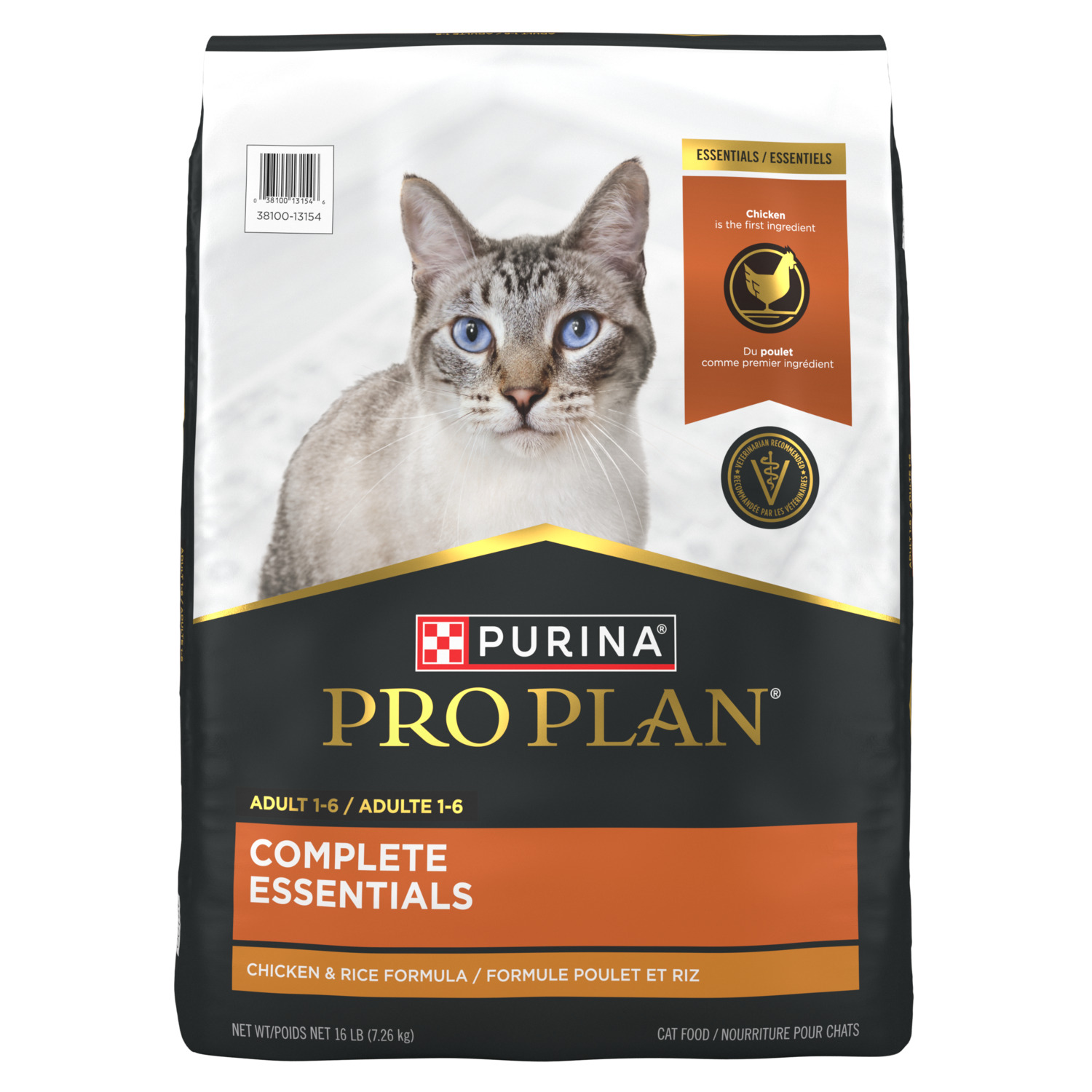
Purina Pro Plan Complete Essentials Chicken
from
$56.48
A vet-trusted, feeding-trial-backed dry food that pairs real chicken with live probiotics for everyday adult-cat nutrition.
Pros
- + Backed by decades of real feeding trials and board-certified veterinary nutritionists
- + High protein with real chicken as first ingredient plus guaranteed live probiotics
- + Widely available and frequently discounted via Autoship
Cons
- – Contains corn protein meal and by-product meal that some owners prefer to avoid
- – Dry-only, so it offers little hydration compared to wet foods
Hill's Science Diet Indoor Chicken
from
$63.99
A lower-calorie, higher-fiber kibble engineered specifically for the hairball and weight challenges of indoor cats.
Pros
- + Specifically formulated with lower calories and higher fiber for indoor lifestyles
- + U.S. veterinarians' #1 recommended brand, backed by AAFCO feeding trials
- + Fiber blend noticeably reduced hairballs in testing
Cons
- – Lower fat makes it less immediately palatable to some cats during transition
- – Uses corn and wheat as prominent ingredients
Royal Canin Indoor Adult
from
$23.99
A precisely formulated indoor-cat kibble from a brand with 200+ vet-developed formulas and rigorous quality testing.
Pros
- + Over 200 vet- and nutritionist-developed formulas with 500,000+ annual quality analyses
- + Tailored kibble shape, fiber, and nutrient balance for indoor cats
- + Available in small bags for trialing before committing
Cons
- – Relies heavily on corn, brewers rice, and corn gluten meal
- – Higher cost-per-pound when bought in small bag sizes
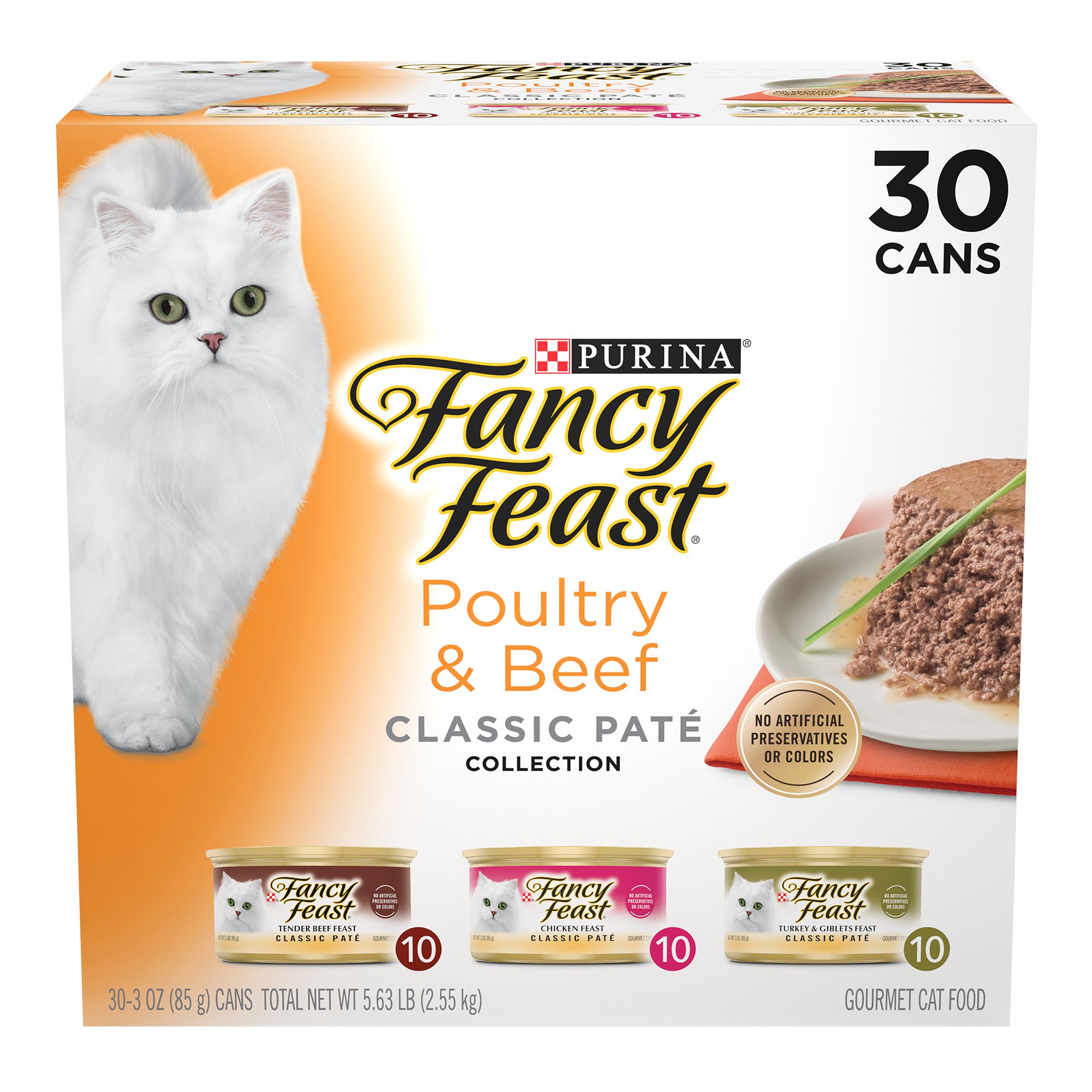
Fancy Feast Classic Poultry Beef Pate
from
$28.06
An affordable, grain-free pate variety pack that picky eaters reliably devour, with strong hydration from high moisture.
Pros
- + Very affordable per can with broad flavor variety picky cats love
- + Grain-free, made in U.S. facilities without artificial colors or preservatives
- + High moisture supports hydration and is easy for cats to eat
Cons
- – Contains meat by-products and added salt/guar gum
- – Lower protein percentage than premium wet foods
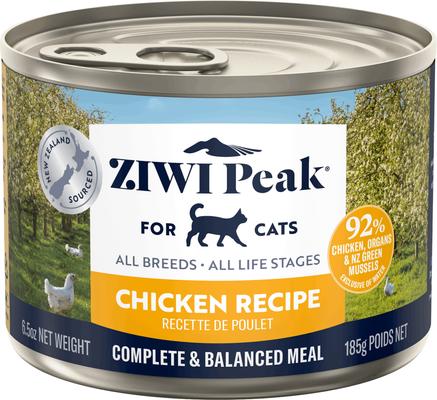
ZIWI Peak Chicken Canned
from
$64.98
A premium, ethically sourced New Zealand wet food packed with meat, organs, and bone for a near-raw nutrient profile.
Pros
- + Very high meat, organ, and bone content with no rendered meats or fillers
- + Ethically and humanely sourced from New Zealand with no recall history
- + Includes green-lipped mussel for natural joint support
Cons
- – Expensive compared to mainstream wet foods
- – Uses chickpea as a binder and is fairly high in fat, which didn't suit every cat
Stella & Chewy's Raw Chicken Morsels
from
$64.99
Shelf-stable freeze-dried raw morsels delivering 98% animal protein with raw-diet nutrition and no refrigeration needed.
Pros
- + 98% animal protein with raw nutrition retained via freeze-drying and HPP safety processing
- + Limited, clean ingredient list ideal for picky cats and sensitive stomachs
- + Shelf-stable and travel-friendly; can be fed dry or rehydrated
Cons
- – Premium price per ounce, especially as a complete diet
- – Requires adding water for hydration since it's a dry-format raw food

Weruva Grand Prize Patés
from
$23.89
A hydrating, low-carb pate variety pack made with bone-free named proteins and free of common gums and fillers.
Pros
- + Uses high-quality bone-free named proteins like cage-free chicken and wild-caught tuna
- + Low-carb, lower-fat formulation with no carrageenan or artificial ingredients
- + Hydrating purée texture suits cats who dislike chunks or shreds
Cons
- – Pricier than mainstream supermarket wet foods
- – Lower fat may not appeal to cats accustomed to richer recipes
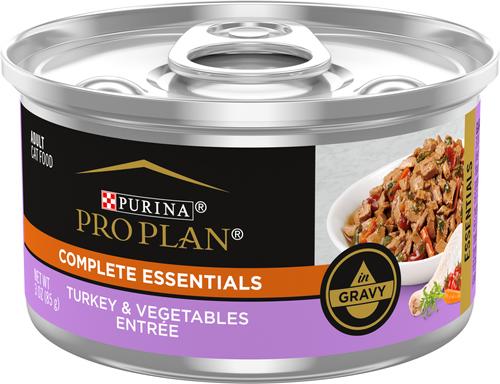
Purina Pro Plan Adult Turkey Vegetable
from
$42.72
A meaty, vet-backed wet food in gravy that picky cats favor at breakfast, with reliable everyday nutrition.
Pros
- + Backed by Purina's extensive research and veterinary nutritionist team
- + Gravy texture is a strong draw for picky eaters per owner reviews
- + Frequently steeply discounted (up to 50% off first Autoship)
Cons
- – Gravy recipes tend to be higher in carbs than pure pates
- – Chunk size can be large for senior or toothless cats
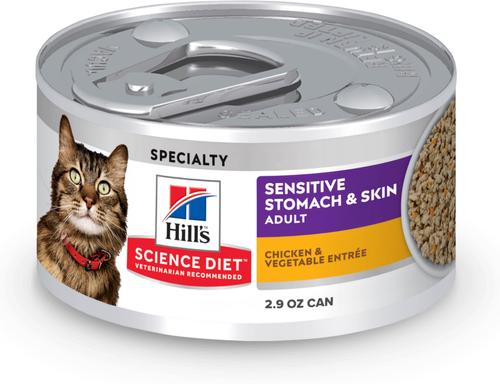
Hill's Science Diet Sensitive Stomach Skin
from
$47.5
A research-backed over-the-counter formula targeting cats with mild digestive upset and skin or coat issues.
Pros
- + Backed by years of research with reported improvements in coat, stool, and appetite
- + Prebiotic fiber plus omega-6 and vitamin E target gut and skin together
- + Over-the-counter, so no veterinary prescription required
Cons
- – Not suitable for cats with severe allergies needing a true limited-ingredient prescription diet
- – Premium price relative to standard adult formulas
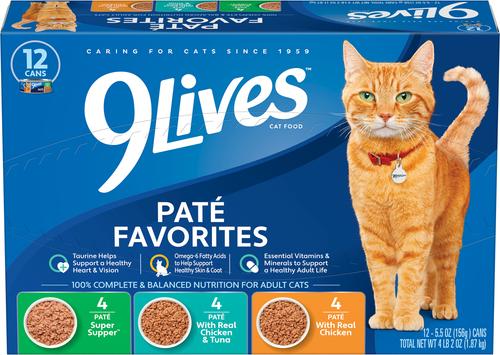
9Lives Wet Variety Pack
from
$8.89
A budget-friendly canned food fortified with taurine and key nutrients for owners who want low-cost wet feeding.
Pros
- + Among the lowest-priced wet foods, making daily wet feeding affordable
- + Fortified with taurine and nutrients supporting heart, vision, skin, and coat
- + High moisture content (84%) for good hydration
Cons
- – Higher in calories per can than some options, so portion control matters
- – Lower ingredient quality than premium brands
The verdict
Our top picks at a glance
Owners wanting a science-backed, widely available everyday dry food at a moderate price.
Indoor adult cats (ages 1–6) prone to weight gain or hairballs.
Owners who value research-driven, precisely portioned nutrition for indoor cats.
Picky eaters and budget-conscious owners who want palatable wet food with flavor variety.
At a glance
How they compare
| Spec | Top pickPurina Pro Plan Complete Essentials Chicken | Hill's Science Diet Indoor Chicken | Royal Canin Indoor Adult |
|---|---|---|---|
| Price | $56.48 | $63.99 | $23.99 |
| Type | Dry kibble | Dry kibble | Dry kibble |
| Added | Live probiotics (Bacillus coagulans) + chicory-root prebiotic | ActivBiome+ prebiotic fiber blend | Fiber blend (pea fiber, psyllium) for hairballs |
| First Ingredient | Chicken | — | Chicken meal |
| Check price → | Check price → | Check price → |
Top 3 of 10 shown — full shortlist above.
There’s no single “best cat food” for every cat, but the strongest all-around everyday choice is Purina Pro Plan Complete Essentials High Protein Chicken & Rice ($56.48). It leads with real chicken, hits 40% protein, and is backed by decades of actual feeding trials, which matters more than any marketing claim on the bag.
The right food really depends on your cat: an overweight indoor cat, a picky eater, a sensitive stomach, and a budget-conscious household all point to different answers. Below I’ve compared ten options on the criteria that actually matter, and named who each one is for (and who should skip it).
How I judged these
I research the cat food market and compare options on consistent criteria rather than testing every bag in a kitchen. The picks below are grounded in manufacturer specs, AAFCO labeling, aggregated owner reviews, and veterinary nutrition consensus.
What I weighted most:
- A meaningful AAFCO “complete and balanced” statement, ideally backed by feeding trials rather than just a nutrient calculation.
- Real animal protein as the first ingredient, since cats are obligate carnivores who need animal-based protein and taurine to avoid blindness and heart disease.
- Moisture, because dry-only diets (3–11% water) leave cats chronically under-hydrated compared to canned food (60–87% water).
- Honest value at the listed price.
Marketing words like “grain-free,” “breed-specific,” and “veterinarian recommended” carry no rigorous standard, so I largely ignored them in favor of the label and ingredient list.
Best overall everyday dry food: Purina Pro Plan Complete Essentials High Protein Chicken & Rice
$56.48 (16-lb) — best for owners who want a science-backed, widely available everyday kibble at a moderate price.
This is the pick I’d hand most people who just want a reliable daily food and a short shopping decision. Chicken is the first ingredient, crude protein hits a strong 40% minimum, and the formula adds guaranteed live probiotics (Bacillus coagulans) plus a chicory-root prebiotic.
What earns it the top spot is the research behind it: Purina runs real feeding trials with board-certified veterinary nutritionists, which is a higher bar than a food that simply meets a nutrient profile on paper. It’s also frequently discounted through Autoship.
- Pros: Feeding-trial-backed, high protein with real chicken, live probiotics, easy to find.
- Cons: Contains corn protein meal and by-product meal some owners avoid. As a dry food, it offers little hydration on its own.
My honest advice: pair it with a wet food at one meal so your cat isn’t living on kibble alone.
Best for indoor weight and hairballs: Hill’s Science Diet Adult Indoor Chicken
$63.98 (15.5-lb) — best for indoor adult cats (ages 1–6) prone to weight gain or hairballs.
Indoor cats burn fewer calories, and obesity is the single most common nutrition-related problem in cats. This kibble is built for that reality: lower fat (11.5%), 319 kcal/cup, and a higher-fiber ActivBiome+ blend that owner reviews credit with cutting down hairballs.
Protein sits at 31%, lower than the Pro Plan, which is a deliberate trade for calorie control.
- Pros: Lower-calorie, higher-fiber design for sedentary cats; the U.S. vets’ #1 recommended brand; AAFCO feeding-trial backed.
- Cons: The lower fat makes it less instantly appealing during a switch, and it leans on corn and wheat.
Best research-driven indoor formula: Royal Canin Feline Health Nutrition Indoor Adult
$24.99 — best for owners who value precisely portioned, vet-developed nutrition and want to trial a small bag first.
Royal Canin’s appeal is its obsessive precision: 200+ vet- and nutritionist-developed formulas and a reported 500,000+ quality analyses a year. The indoor kibble uses a pea-fiber and psyllium blend for hairball control and a tailored kibble shape.
The small-bag availability is genuinely useful. You can test palatability before committing.
- Pros: Heavily researched and precisely balanced, hairball-targeted fiber, small trial sizes.
- Cons: Relies heavily on corn, brewers rice, and corn gluten meal. Cost-per-pound is high in small bags.
Best budget wet food for picky eaters: Purina Fancy Feast Classic Pate Poultry & Beef Variety Pack
$22.99 (30 x 3-oz cans) — best for picky eaters and budget households who want palatable wet food with variety.
If you’ve got a cat who turns up their nose at everything, Fancy Feast pate has an almost suspiciously good track record of getting eaten. At under a dollar a can with three flavors, it makes daily wet feeding affordable, and the 78% moisture is real hydration value.
It’s grain-free and made in the U.S. without artificial colors. This isn’t a premium recipe, though.
- Pros: Cheap, varied, high moisture, reliably devoured.
- Cons: Contains meat by-products, added salt, and guar gum; protein (10–11%) is lower than premium pates.
Best premium wet food: ZIWI Peak Chicken Recipe
$53.99 (12 x 6.5-oz) — best for owners prioritizing high-meat, low-carb, ethically sourced nutrition.
This is about as close to a carnivore-ideal canned food as the mainstream market offers: 92% real New Zealand meat, organs, and bone, plus 3% green-lipped mussel for natural joint support. It’s ethically and humanely sourced from free-range farms with no recall history.
For a cat with sensitivities or an owner who wants minimal fillers, it’s excellent. The price is the catch.
- Pros: Very high meat content, no rendered meats or fillers, joint support, clean sourcing.
- Cons: Expensive versus mainstream wet food. Uses chickpea as a binder and runs fairly high in fat, which didn’t suit every cat per owner reviews.
Best freeze-dried raw: Stella & Chewy’s Raw Cat Dinner Morsels, Chicken
$64.99 (18-oz) — best for owners who want raw-style nutrition with pantry convenience, and cats with food sensitivities.
Freeze-dried raw is the practical middle ground between a fresh raw diet and the food-safety risks that come with one. These morsels are 98% animal protein with cage-free chicken first, free of grain, peas, lentils, and potato, with added taurine and probiotics, and they’re stabilized via HPP for safety.
A word of caution: traditional raw diets lack strong evidence and carry real pathogen risk, and many are nutritionally incomplete. The freeze-dried, HPP-treated, AAFCO-balanced approach here sidesteps a lot of that.
- Pros: High animal protein, short clean ingredient list, shelf-stable and travel-friendly.
- Cons: Premium price per ounce, and you’ll want to rehydrate it since dry-format raw adds no moisture on its own.
Best clean-label pate: Weruva Paté Grand Prize Variety Pack
$27.99 — best for owners who want a low-carb wet pate with no carrageenan, grains, or gums.
Weruva uses bone-free named proteins like cage-free chicken and wild-caught tuna in a smooth, hydrating purée. It’s low-carb and skips carrageenan, corn, wheat, soy, and artificial ingredients, which is the appeal for owners watching additives.
The purée texture suits cats who reject chunks and shreds.
- Pros: Quality named proteins, low-carb and additive-free, hydrating smooth texture.
- Cons: Pricier than supermarket wet food, and the lower fat may underwhelm cats used to richer recipes.
Best gravy wet food: Purina Pro Plan Complete Essentials Turkey & Vegetable Entrée in Gravy
$22.96 (24 x 3-oz) — best for cats who prefer gravy and owners who want a wet food that pairs with the dry line.
Some cats only want gravy, and this is the science-backed way to give it to them. It’s backed by Purina’s research team and pairs neatly with the Pro Plan dry food above, so you can build a consistent dry-plus-wet routine from one brand.
- Pros: Research-backed, gravy texture wins over picky eaters, often steeply discounted.
- Cons: Gravy recipes run higher in carbs than pure pates, and the chunk size can be large for senior or toothless cats.
Best for sensitive stomach and skin (no prescription): Hill’s Science Diet Sensitive Stomach & Skin
$36.99 — best for adult cats with occasional digestive upset or coat issues who don’t need a prescription diet.
If your cat has mild, recurring tummy trouble or a dull coat but no diagnosed severe allergy, this over-the-counter formula is a sensible first step. It combines prebiotic fiber for the gut with omega-6 fatty acids and vitamin E for skin and coat, and it comes in both dry and wet.
Be clear about its limits: a cat with a true food allergy needs a prescription limited-ingredient diet from your vet, not this.
- Pros: Research-backed, gut and skin support together, no prescription needed.
- Cons: Not for severe allergies, and pricier than standard adult formulas.
Best ultra-budget wet food: 9Lives Wet Cat Food
$9.99 — best for budget-conscious owners who want to add affordable wet feeding to the routine.
When the choice is between feeding some wet food and feeding none because of cost, 9Lives makes wet feeding possible. It’s fortified with taurine and runs 84% moisture for solid hydration.
Ingredient quality is lower than premium brands, and it’s higher in calories per can, so portion control matters.
- Pros: Among the cheapest wet foods, taurine-fortified, very high moisture.
- Cons: Lower ingredient quality and more calories per can than several alternatives.
How to choose the right cat food for your cat
Start with the AAFCO statement on the label. “Complete and balanced” for your cat’s life stage is non-negotiable, and a food validated by feeding trials beats one that merely calculates to a nutrient profile.
Then narrow by your cat’s actual situation:
- Indoor and gaining weight? A lower-calorie indoor formula like Hill’s Indoor or Royal Canin Indoor.
- Picky? Fancy Feast pate or a gravy entrée are the easiest sells.
- Wants the cleanest, meatiest bowl? ZIWI Peak or Stella & Chewy’s.
- Tight budget? Fancy Feast for value-meets-quality, or 9Lives if cost is the deciding factor.
A few principles regardless of which you pick: include some wet food for hydration, since dry-only diets raise the risk of urinary and kidney problems. Measure portions rather than free-feeding all day, because guessing leads to obesity. Keep treats under 5–10% of daily calories. And transition to any new food gradually over a week or more, since abrupt switches cause digestive upset.
Skip plant-based and homemade diets unless a veterinary nutritionist designs them. Cats can’t thrive on plant protein, and the fresh-food superiority claims you see in ads aren’t backed by strong evidence yet.
How long does it take a cat to digest food?
A cat takes roughly 10 to 24 hours to fully digest a meal, with most food moving through the stomach in a few hours and completing the digestive tract over the rest of that window. Wet food tends to move faster than dry kibble because of its high moisture content. If your cat regularly vomits undigested food well after eating, that’s worth a vet visit rather than a normal digestion timeline.
Is cat food bad for dogs?
Cat food isn’t toxic to dogs, but it’s the wrong diet for them. It’s formulated for obligate carnivores, so it’s higher in protein and fat than dogs need, which can trigger digestive upset or, over time, weight gain and pancreatitis in sensitive dogs. An occasional stolen bite is rarely an emergency, but cat food should never replace a dog’s complete-and-balanced food.
Sources
- Feeding Your Cat | Cornell University College of Veterinary Medicine
- Nutrition - General Feeding Guidelines for Cats | VCA Animal Hospitals
- Proper Nutrition for Cats - Merck Veterinary Manual
- Nutritional Requirements of Small Animals - Merck Veterinary Manual
- Cat Nutrition Tips | ASPCA
- Nutrition for Your Cat - Veterinary Partner - VIN
- Feeding Your Cat: Know the Basics of Feline Nutrition
- YOUR CAT’S NUTRITIONAL NEEDS - National Academies
FAQ
Frequently asked questions
- What is the single best cat food?
- There isn't one best food for every cat, but the strongest all-around everyday pick is Purina Pro Plan Complete Essentials High Protein Chicken & Rice, thanks to real chicken as the first ingredient, 40% minimum protein, and feeding-trial validation. The right choice ultimately depends on your cat's age, weight, and health needs. Always confirm the label says 'complete and balanced' for your cat's life stage.
- Is wet or dry cat food better?
- Both can be nutritionally complete, but wet food has a real edge for hydration since it's 60–87% water versus 3–11% in dry kibble. Chronically low water intake from dry-only diets raises the risk of urinary tract and kidney problems. Many owners get the best of both by feeding dry for convenience and adding wet food at one or more meals.
- How tall should a cat food bowl be?
- A cat food bowl should sit low enough that your cat can eat with a comfortable, neutral neck posture, typically just a few inches off the floor. Many cats prefer wide, shallow bowls that don't press on their whiskers. If your cat is older or arthritic, a slightly raised bowl (around 2–4 inches) can ease neck and joint strain, but extreme heights aren't necessary.
- Is grain-free cat food better?
- Not inherently. 'Grain-free' is a marketing term with no rigorous standard, and grains aren't a common allergen for most cats. What matters more is high-quality animal protein, adequate taurine, and an AAFCO 'complete and balanced' statement. Focus on the ingredient list and feeding-trial backing rather than the grain-free label alone.
- How much should I feed my cat?
- Follow the portion guidelines on the package as a starting point, then adjust based on your cat's body condition, since label estimates are manufacturer averages, not individual recommendations. Measure portions instead of free-feeding all day, because guessing is a leading cause of feline obesity. Keep treats to no more than 5–10% of daily calories.